

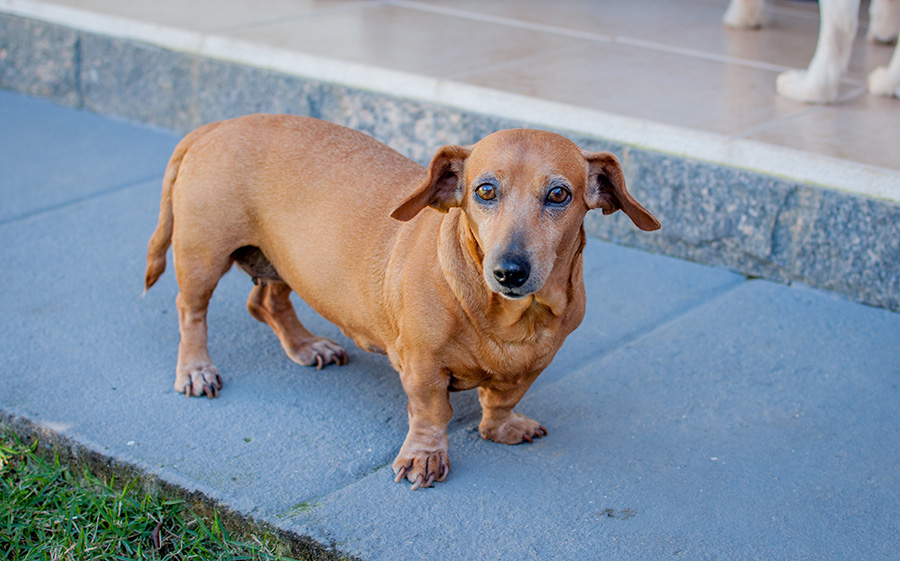
Floppy says: My nap schedule has several important appointments. Please knock gently!
From Floppy’s owner: Dachshunds often sleep in several stretches across the day and night. The most useful guide is your dog's usual pattern, not a rigid breed-specific number of hours. A dog that naps and then wakes comfortably for normal activities is different from a dog that is unusually weak, hard to rouse, or no longer interested in food and walks.
If your dachshund's sleep or energy changes noticeably, consider what else has changed and contact your veterinarian when the change is unexplained or persistent. Difficulty breathing, collapse, or inability to stand needs urgent attention.

What affects a dog's sleep?
Age, health, activity, household schedules, and the sleeping environment all influence rest. Puppies may need frequent quiet periods between short activities. An older dog may rest more, but age alone should not be used to explain away discomfort or a sudden decline.
A busy day can be followed by extra rest. Conversely, a noisy household can interrupt sleep even when the dog appears to spend much of the day lying down. Resting with eyes open is not necessarily sleep, so casual estimates can be misleading.
Do not keep your dog awake to meet a target
It is not helpful to force a dachshund to stay busy for ten or twelve hours so that they sleep at night. Offer appropriate activity and allow undisturbed rest. Overstimulation can make settling harder rather than easier.
A balanced day might include a comfortable walk, sniffing opportunities, a short training session, meals, bathroom breaks, and several quiet periods. This is an example of variety, not a prescribed schedule or exercise dose.

Build a useful baseline
For several ordinary days, note when your dog sleeps, wakes, eats, toilets, and chooses to play. Record new nighttime pacing, unusual vocalizing, difficulty getting comfortable, or a reluctance to get out of bed. A short video can help a veterinarian understand an unfamiliar behavior.
Do not diagnose thyroid disease, depression, or a sleep disorder from hours slept. Many problems can affect energy, and a clinical examination may be needed to distinguish them.
Make nighttime predictable
Provide a comfortable bed, a calm wind-down period, and a bathroom opportunity before settling. Keep the sleeping area at a comfortable temperature and reduce avoidable disturbance. For a new puppy, arrange a nearby safe sleeping place and respond to bathroom needs rather than expecting adult overnight habits immediately.
If your dog begins waking at night after previously sleeping well, review health and comfort before treating it as a training problem. A change in medication, household activity, or access to the toilet area is worth mentioning to the veterinarian.
Bed, crate, or dog bed?
Any arrangement should allow comfortable rest and safe access. A floor-level bed is a straightforward option for avoiding jumps to and from high furniture. If you share your bed, consider your own sleep quality, allergies, space, and whether the dog guards the bed or startles when touched.
A crate is suitable only when the dog is comfortable using it and has enough room to rest normally. It is not a cure for nighttime distress. You can change sleeping arrangements gradually; allowing a dog on the bed once does not make future change impossible.
What sleeping positions can and cannot tell you
A dog may curl up, stretch out, or lie on the side for several reasons, including temperature and comfort. A single position is not a reliable test of confidence, anxiety, or spinal health. Do not repeatedly reposition a comfortable sleeping dog to match a supposed ideal posture.
If your dachshund seems painful when lying down or getting up, ask your veterinarian for guidance. Focus on comfort, normal waking behavior, and changes over time rather than judging whether your dog is “lazy.”