

Floppy says: Woof! A whole basket of toys, and somehow one always gets the starring role. Let my owner explain how to enjoy a favorite without overlooking safety.
The owner’s explanation
A dog may prefer a toy because of its texture, movement, scent, or the games associated with it. There is rarely a way to know the exact reason from observation alone. The useful question is whether the toy supports comfortable, safe play.

Notice what your dog actually chooses
Does your dog carry the toy, chase it, chew it, or bring it to you? Those patterns can help you choose another suitable toy without turning a preference into a personality test. Breed history may influence play, but it does not tell you which toy an individual dog must like.
Try offering two safe options in a quiet setting and note which one your dog approaches. Repeat on another day. A choice can change with the setting, energy level, or who is playing, so one observation is not a permanent label.
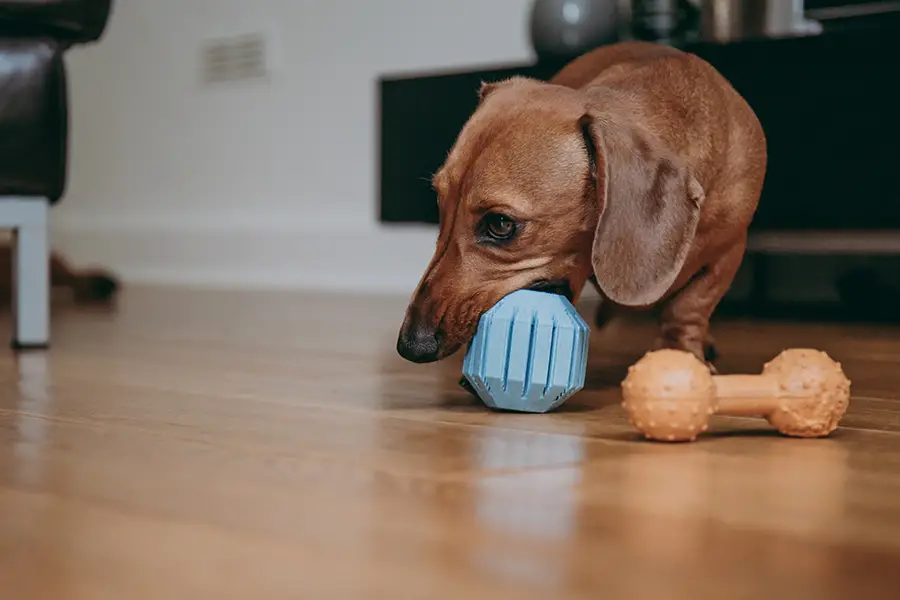
Match the toy to the game
- For carrying, choose a size the dog can hold comfortably but cannot swallow.
- For fetching, use a toy intended for dogs and keep the game on safe footing.
- For chewing, inspect the surface, seams, and any pieces that can come loose.
- For interactive play, teach a rewarded trade or drop cue rather than grabbing the toy.
A favorite toy still needs replacing
A familiar toy may be comforting, but damaged stuffing, loose squeakers, and unraveling threads are reasons to remove it. Offer a suitable replacement or a trade. Do not leave a known shredder alone with a toy they can dismantle, and do not assume a sock or slipper is safe because the dog likes its smell.
If you think your dog has swallowed a toy part, contact a veterinarian promptly. Cornell explains that swallowed objects can cause a gastrointestinal obstruction. Repeated vomiting, loss of appetite, or abdominal discomfort needs veterinary attention; do not assume missing pieces will pass safely.
When attachment needs help
Freezing, hard staring, growling, or snapping when someone approaches a toy can signal guarding. Give the dog space; do not test the reaction by repeatedly taking the toy. Keep children away from that situation and ask a veterinarian or qualified reward-based behavior professional for a plan.
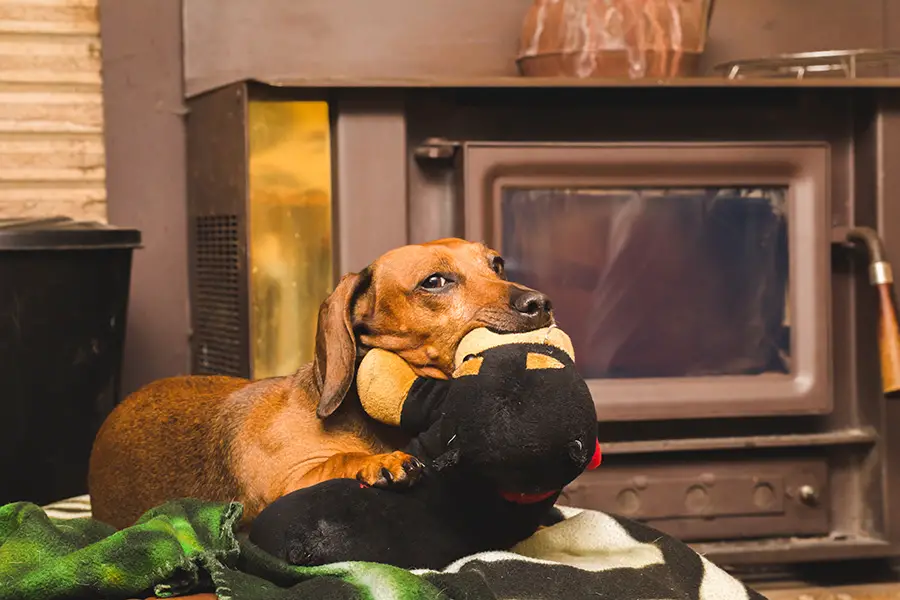
A sudden change in play, reluctance to chew, or unusual protectiveness also deserves attention. Pain or other changes can affect behavior. If an intact female begins nesting or treating a toy like a puppy, discuss the behavior with the veterinarian instead of assuming it is simply cute or harmless.
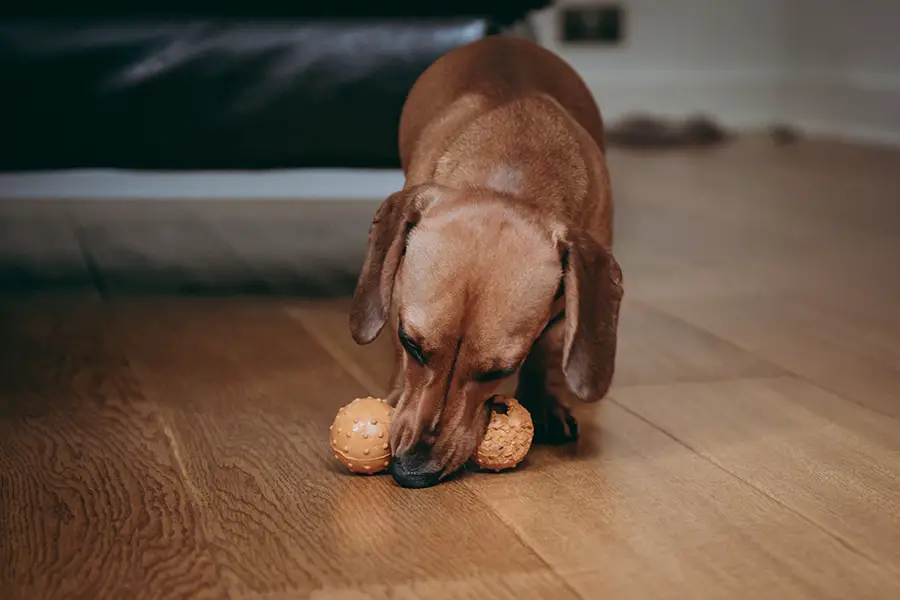
Keep the routine flexible
Rotate suitable toys, allow rest, and make some play sessions about spending time together. A toy can add enrichment, but it cannot replace bathroom breaks, appropriate activity, social contact, or help for a dog distressed when alone.