
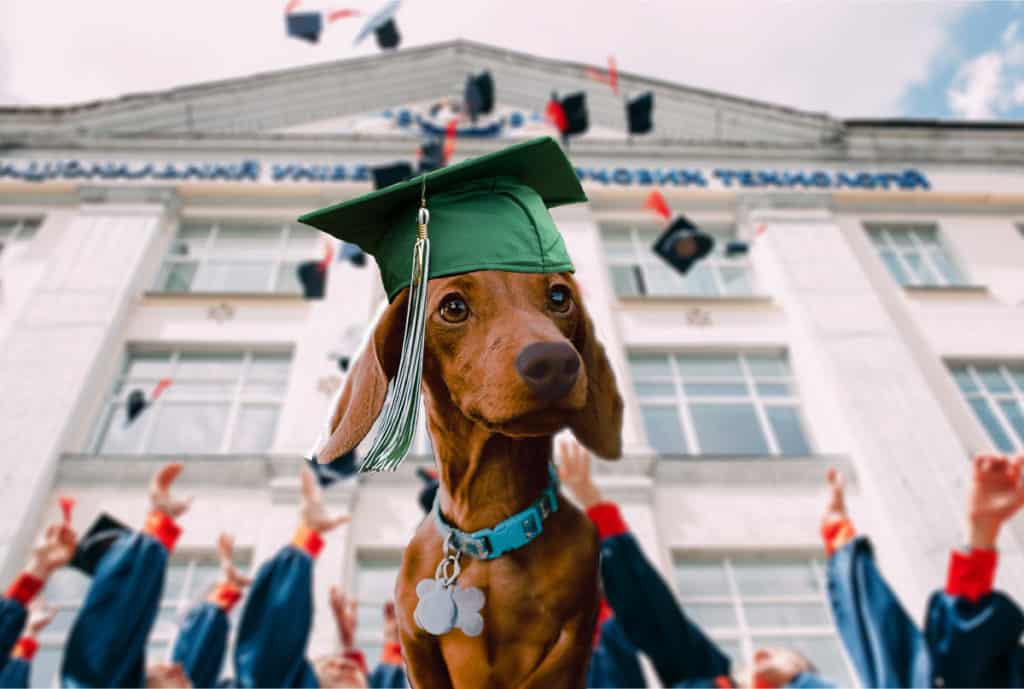
Floppy says: Woof! I can find a forgotten crumb faster than you can find your keys. Now my owner can explain why learning a cue takes a little more practice.
The owner’s explanation
Dachshunds can be capable, curious learners, but intelligence does not mean instant obedience. A dog that follows a scent instead of a cue may be distracted, underprepared for that setting, or more interested in the environment than the reward you are offering. That can call for a change in training or the environment, not a label that the dog is unintelligent or trying to outrank you. A sudden change in attention or response can also warrant a health check.
What does “smart” mean for a dachshund?

Learning a cue, solving a food puzzle, and following an interesting smell are different skills. Dachshunds were developed as hunting dogs, and many enjoy exploring with their noses. Their history helps explain that interest; it does not establish a universal intelligence score or predict how quickly your particular dog will learn.
A useful question is not “Where does this breed rank?” but “What makes this dog want to participate?” Try a quiet room, a small food reward or favorite toy, and a task simple enough for an early success.

Are puppies easier to train than adults?
Puppies are learning household routines for the first time, but they also have short attention spans and developing bladder control. Adult dogs can learn new skills too, sometimes with the advantage of a longer attention span. An adult may need extra practice replacing an established habit. Choose a dog based on household fit, not the promise that one age will be effortless.

How to help your dachshund learn
- Choose one skill, such as looking at you when you say the dog’s name.
- Begin somewhere quiet and reward the response immediately.
- Keep sessions brief enough that your dog remains interested.
- Practice in a second room before expecting the skill outside.
- Increase distractions gradually rather than repeating a cue more loudly.
The American Veterinary Society of Animal Behavior recommends reward-based training. Hitting, intimidation, and leash corrections are not necessary to teach a dog to listen.
What about housetraining?
Start with a predictable routine: toilet opportunities after waking, meals, and play, plus frequent breaks appropriate to the individual puppy. Reward outdoor elimination while you are still outside. Supervise indoors and use a comfortable puppy-safe area when you cannot watch closely.
There is no reliable two-week guarantee. Keep a log of meals, toilet breaks, and accidents so you can spot a schedule that needs adjusting. A dog that suddenly starts having accidents, strains, or urinates unusually often needs veterinary assessment rather than a tougher training plan.
Can you teach quieter behavior?
First identify the trigger. Window barking may call for moving a resting spot or blocking the view. A dog barking in distress when alone needs a different plan from one asking for play. Reward a quiet alternative, such as settling on a mat, before the dog becomes overwhelmed. Do not assume every bark should be ignored.
Use scent games instead of risky chasing
Hide a few pieces of the dog’s normal food in easy-to-find spots and invite a search. Increase difficulty slowly and supervise. This offers an outlet for sniffing without sending a pet after wildlife. Hunting is not a skill that a few minutes with a scented toy makes safe.
The best measure of progress is whether your dog can succeed in everyday situations with less help. Track that progress and make the next step small.