
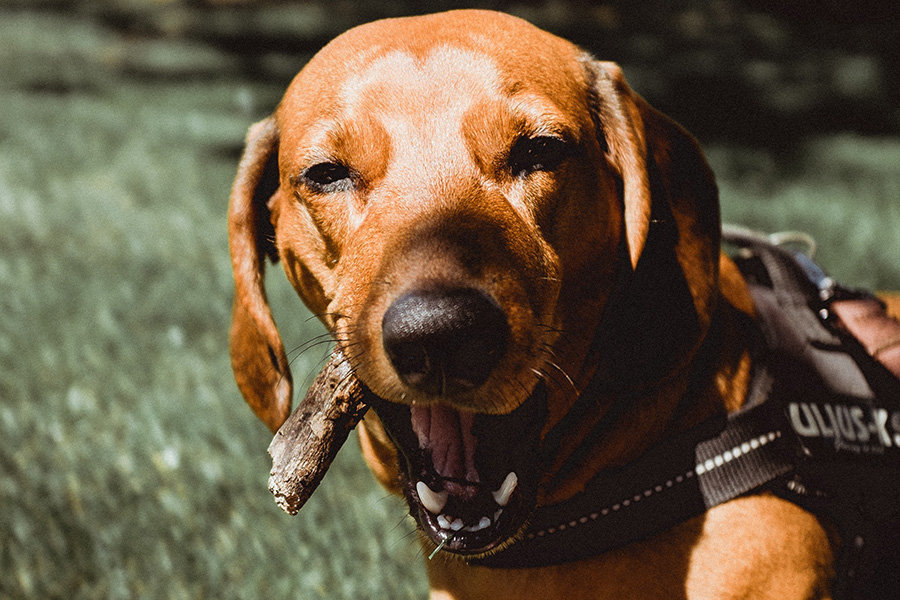
Floppy says: Woof! A good walk starts with a comfortable fit. My owner will check the straps before we head outside.
The owner’s explanation
As an Amazon Associate, we earn from qualifying purchases.
The right dachshund harness fits the individual dog securely without rubbing, restricting normal movement, or pressing awkwardly near the throat. Measure for the exact product, check the fit in motion, and reassess it over time. No harness is injury-proof or escape-proof simply because it is expensive or advertised for dachshunds.
Harness or collar?

A harness can avoid concentrating leash tension at the neck, but suitability depends on fit, design, and the dog’s needs. A collar can still carry identification. If your dog has neck, back, breathing, or mobility concerns, ask your veterinarian which setup is appropriate.
Do not use leash jerks or tighten equipment to punish pulling. Comfortable equipment and reward-based loose-leash practice work together; the purchase alone does not teach walking skills.
Take the measurements the manufacturer requests
Use a flexible tape and record chest girth and any required neck or body measurements. Follow the diagram for that model rather than guessing where the straps will sit. Compare actual measurements with the size chart and check how much adjustment is available.
Avoid adding arbitrary extra inches unless instructed, because oversizing can create an escape risk. If measurements fall between sizes, ask the manufacturer and check the return policy. A puppy needs repeated fit checks as it grows.
Compare designs by function
A back attachment, front attachment, step-in style, or over-the-head design may suit different needs. Look at where straps sit relative to the shoulders and armpits, whether buckles press on the skin, and how easily you can put the harness on without wrestling with the dog.
A longer back panel does not automatically distribute force better. Do not carry a dog by an ordinary walking-harness handle. Lifting requires equipment explicitly designed for that purpose, used as directed, or appropriate support of the dog’s body. Ask your veterinarian about lifting a dog with pain or mobility problems. A walking harness is not automatically a crash-tested vehicle restraint.
Materials involve trade-offs
Nylon webbing can be practical and adjustable; inspect edges and stitching. Mesh may be lightweight, but padding and coverage can still affect heat and rubbing. Fabric styles vary in washability and structure. Leather requires suitable care and can change condition when wet.
Do not assume one material is always cheapest, most comfortable, or most durable. Construction, fit, use, and maintenance matter more than the material name alone.
Test indoors before relying on it outdoors
- Check every buckle and leash attachment point.
- Let your dog walk, turn, sit, and lie down.
- Look for straps sliding toward the throat or into the armpits.
- Assess whether backing up could let the dog slip free, without frightening or forcing it.
- Check the skin after a short trial and adjust or stop if rubbing appears.
Introduce the harness with rewards and remove it when unsupervised unless there is a specific reason and safe plan to leave it on. Loose loops can catch on objects.
Reviewing the linked products
Treat the original listings below as options to inspect, not tested winners. Verify the current size chart, design, materials, seller, and return terms. Choose the product that passes a real fit check on your dog rather than the one with the strongest safety claim.
Original product listings and related guides
- SPORN harness listing (original short link)
- Muttitude harness and leash listing (original short link)
- OneTigris harness listing (original short link)
- Dachshund Clothes: Practical Styles and Fit Checks
- Dachshund Jackets and Outdoor Gear: How to Choose a Comfortable Fit