
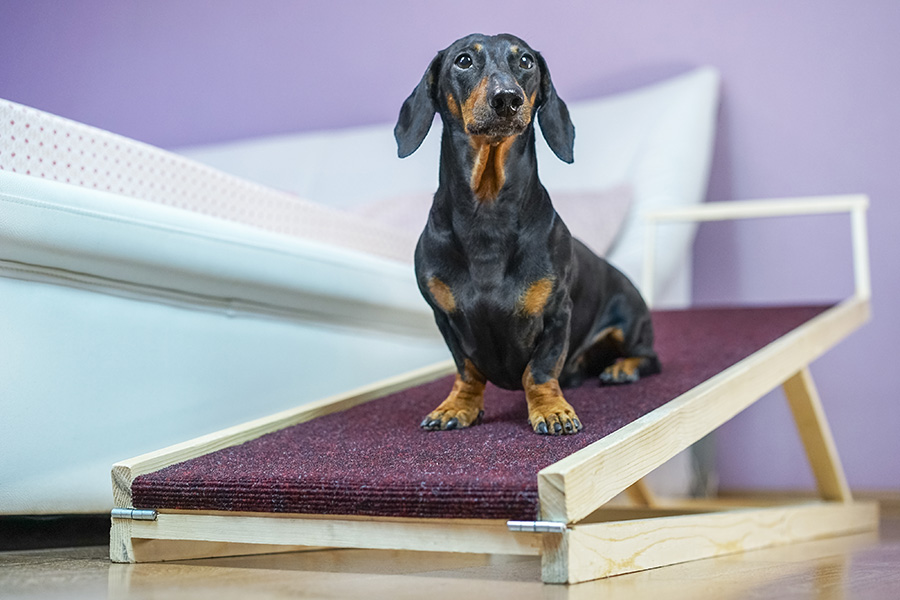
Floppy says: Short legs appreciate a steady landing. Please keep the obstacle course out of my way!
From Floppy’s owner: A dachshund-friendly home should make everyday movement comfortable, keep hazards out of reach, and make health changes easier to notice. Start with slippery floors, access to high furniture, safe handling, and a plan for routine veterinary care. No home modification can guarantee prevention of IVDD or every other illness.
The aim is sensible risk reduction, not preventing your dog from enjoying normal life.

Review the routes your dog actually uses
Watch how your dachshund reaches the door, water bowl, resting place, and favorite spot near the family. Look for slipping, abrupt changes in height, and places where the dog tries to jump around an obstacle.
Secure non-slip runners where helpful. If using a ramp, choose a stable design with good traction and teach the dog to use it with rewards. A ramp that shifts, is too steep, or can be bypassed does not solve the practical problem.
Use gates when you need to control access to stairs or a recovery area. Decisions about stair use and exercise should reflect your dog's age, comfort, medical history, and veterinary advice, not an unsupported rule that stairs become protective after a particular birthday.
Handle the body with support
Support the chest/front of the body and the rear when lifting a comfortable dog. Keep the dog close to you and avoid dangling the hindquarters. Do not lift by the legs, collar, or tail.
Teach children to interact at floor level instead of carrying the dog. If lifting causes pain or struggling, stop and ask for veterinary guidance rather than assuming better restraint is the answer.
Know when a back concern is urgent
Sudden pain deserves prompt veterinary advice. Sudden wobbling, weakness, difficulty standing, or inability to walk needs urgent veterinary assessment. Restrict unnecessary movement while contacting the clinic; do not repeatedly test stairs or jumps.
A harness may be useful walking equipment, but it is not a medical brace or a proven way to prevent inherited disc disease. Equipment should fit comfortably without being credited with unsupported treatment benefits.
Separate allergy from infection
Itchy, red, greasy, flaky, or smelly skin can have several causes. An allergy and an infection are not interchangeable diagnoses, though they can occur together. VCA Animal Hospitals explains that Malassezia yeast can normally be present on a dog’s skin; overgrowth can cause dermatitis.
It is inaccurate to describe every yeast problem as something caught from grass, food, or dirty water. Cleaning the home cannot guarantee prevention. A veterinarian may need to examine the skin and identify the underlying reason the problem keeps returning.
Useful observations for a skin appointment
Note where itching begins, whether the ears or paws are affected, and whether it changes with seasons, products, or activities. Bring a list of food, treats, medications, preventives, and grooming products. Photographs showing progression may help if the skin looks different on appointment day.
Avoid applying leftover creams, essential oils, or an improvised anti-yeast treatment. Do not change several things at once unless advised; that can make it harder to work out what helps.
Make grooming a comfortable inspection
Check coat, skin, paws, and equipment fit during calm handling. Remove wet or soiled clothing and wash bedding. Use the bathing and ear-care plan appropriate to your dog rather than trying to scrub away a recurring medical problem.
Seek prompt advice for painful skin, swelling, discharge, or rapid deterioration. If the dog guards a sore area, do not force the inspection.
A practical weekly home check
- Are gates, ramps, and floor coverings secure?
- Can the dog reach food, water, and the toilet route comfortably?
- Are toys and clothing intact and free of chewable loose parts?
- Are medications, cleaning products, and small objects inaccessible?
- Have movement, appetite, drinking, skin, or behavior changed?
Fix the easy environmental problems and bring persistent changes to your veterinarian. Precautions work best as part of ordinary care, not as promises that a carefully managed dog will never become ill.