Floppy says: Hide a snack and let my nose do the work. This detective is ready!
From Floppy’s owner: Good dachshund games give your dog opportunities to sniff, search, learn, and interact without requiring repeated leaps or frantic turns. Start with a game your dog can succeed at, use a secure space with good footing, and stop before the dog becomes tired or frustrated.
The suggestions below are for comfortable dogs doing ordinary play. If your dachshund has pain, a spinal history, or prescribed activity restrictions, ask the treating veterinarian which activities are suitable first.

1. Find the treat
Place a small piece of your dog's usual food on the floor where it is easy to see. Say a simple cue such as “find it,” then let the dog investigate. Once the idea is clear, place a few pieces in easy locations at floor level.
Increase difficulty by making the hiding places slightly less obvious, not by putting food on furniture or stairs. Count the food as part of the day's intake. Use only locations you want your dog to search, not open trash cans or storage areas.
2. A supervised digging spot
If your dog enjoys digging, offer a designated area with a safe surface or a loose blanket laid on the floor. Hide a toy shallowly at first so success is easy. Keep the activity separate from furniture or bedding you do not want damaged.
Supervise closely and stop if the dog starts eating fabric, filling, or soil. Do not bury food deeply or create a setup in which the dog becomes trapped under heavy covers. Some dogs prefer searching to digging; there is no need to force the activity.
3. Hide-and-seek with a person
Have one person stay with the dog while another stands out of sight nearby. Call once and reward the dog for finding the person. Begin with obvious, easy hiding places.
Use an enclosed, dog-safe area. Avoid hiding upstairs, behind an unsecured exterior door, or anywhere that encourages jumping. The game should practice finding you, not teach the dog to search the neighborhood alone.
4. Short-distance fetch
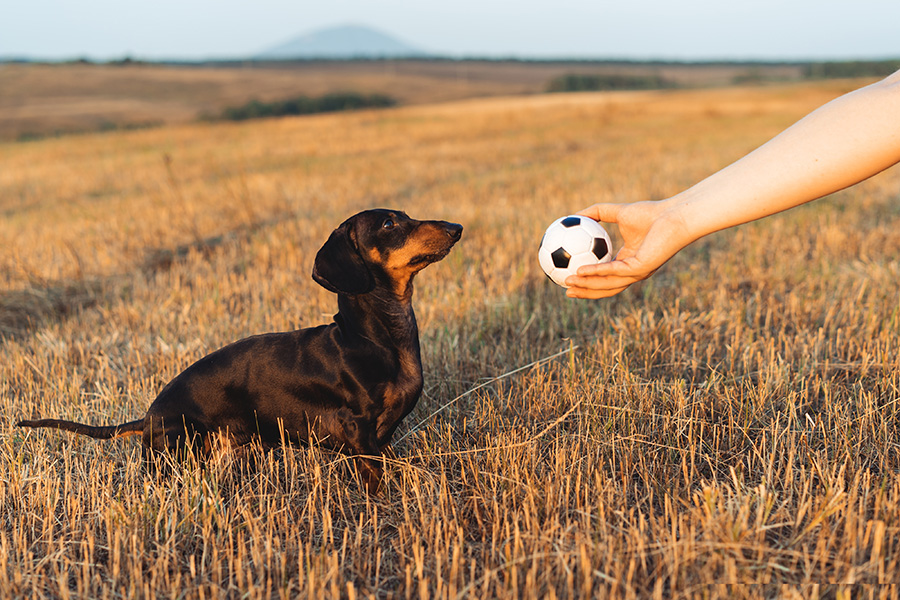
Roll a suitable toy along a non-slip surface instead of throwing it high. Reward bringing it back or trading it for another toy. Some dachshunds prefer the chase to the return; teach the exchange separately rather than grabbing the toy from the mouth.
Choose a size and material your dog cannot easily swallow or break. Avoid sharp turns and long repetitive sessions. If the dog becomes stiff, slows down, or loses interest, end the game.
5. Gentle tug and a release cue
For a healthy dog that enjoys tug, keep the toy low and movements controlled. Let the dog set much of the pressure. Do not lift the dog off the ground, jerk the neck, or swing the body.
Practice a calm trade for a reward so releasing the toy becomes part of the game. Stop if teeth contact hands, the dog becomes uncomfortable, or the activity escalates beyond easy control. Tug is optional, not a required exercise for every dachshund.
6. A recall relay
Two people can stand a short distance apart and take turns calling the dog. Reward arrival with something the dog values. Keep the route clear, stay on one level, and make the distance appropriate to the space.
Use tiny food rewards from the daily allowance rather than adding a large volume of treats. Accuracy and enthusiasm matter more than speed. This is a training game, not a weight-loss program.
Avoid turning every game into a chase

Do not improvise a chase toy with thread, string, or elastic. Swallowed string and damaged toys can cause serious intestinal injury. Use a suitably sized toy without loose strands, supervise play, and remove it when damaged. Contact your veterinarian promptly if your dog may have swallowed part of a toy or any string. Fast lure chasing and organized racing are not necessary to keep a dachshund entertained, and the excitement of an event does not establish that it suits your dog.
A quick play-session check
Check the floor, toy condition, available space, and your dog's comfort before starting. Keep water available, allow rest, and finish while the dog still enjoys the activity. If a game repeatedly produces frustration, choose a simpler version or a different game.
The best game is one your dog wants to play again, not one that looks impressive on video.
Play helps, but it is not a health test
Enjoyable activity can support wellbeing, but playing does not rule out anxiety, pain, illness, or depression-like changes. A dog may join a game and still need help. Persistent withdrawal, reduced appetite, a change in energy, or a new reluctance to play deserves veterinary advice, not simply more exercise.
Stop immediately if your dachshund seems painful or unsteady. New weakness, wobbliness, or inability to walk needs urgent veterinary attention.