

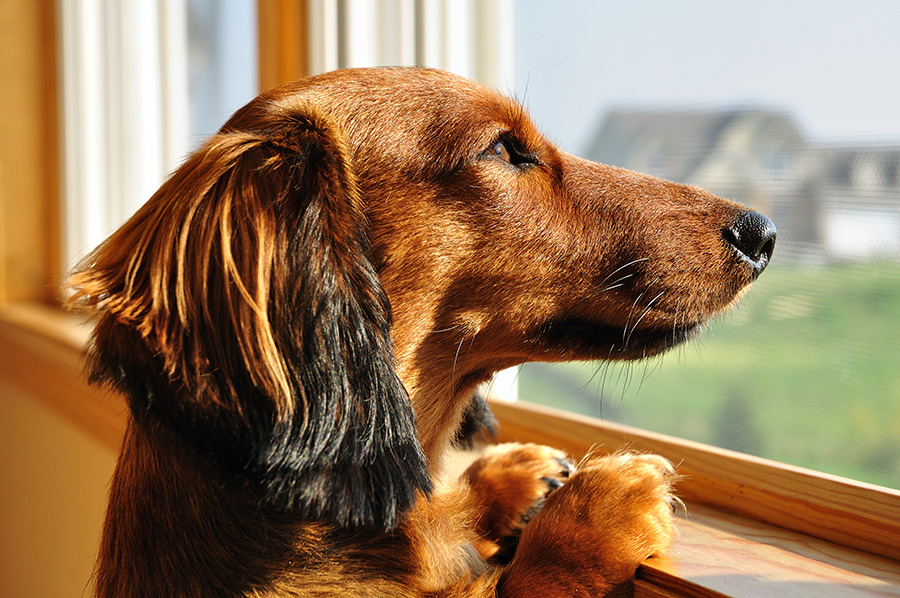
Floppy says: The front door closing can feel like a big event in a little dog’s day. My owner will explain how to tell comfortable alone time from distress.
The owner’s explanation
A dachshund that barks, paces, soils the house, or damages things when left alone may be distressed, but those behaviors do not prove separation anxiety on their own. Start by recording what happens during an absence and discussing persistent or severe problems with your veterinarian. Punishment after you return will not address the cause.
Some dachshunds settle comfortably on their own; others struggle with even a short separation. There is no breed-wide time limit that tells you whether your individual dog is coping.

Look at the pattern, not just the mess
A camera can show whether your dog settles after you leave or remains agitated. Note the time you leave, when the behavior begins, what it looks like, and whether an outside sound or passing person triggers it. Keep the camera and cords out of reach. See Merck Veterinary Manual: behavior problems in dogs.
Possible warning signs include repeated pacing, persistent vocalizing, panting when it is not hot, drooling, escape attempts, or difficulty settling. Destruction around a door deserves particular attention, especially if your dog could injure the mouth or paws. Accidents also warrant a medical check if they are new.
A chewed shoe alone does not identify the problem. A dog may need an appropriate chewing outlet, better supervision, or a shorter interval between bathroom breaks. The useful question is what the dog was experiencing before the behavior occurred.
Meet everyday needs before practicing
Offer a suitable outing, a bathroom break, water, and a comfortable resting area. Choose activities appropriate to your dog's age and health. Exhausting a dog is not a treatment for panic, and a long walk does not guarantee a relaxed absence.
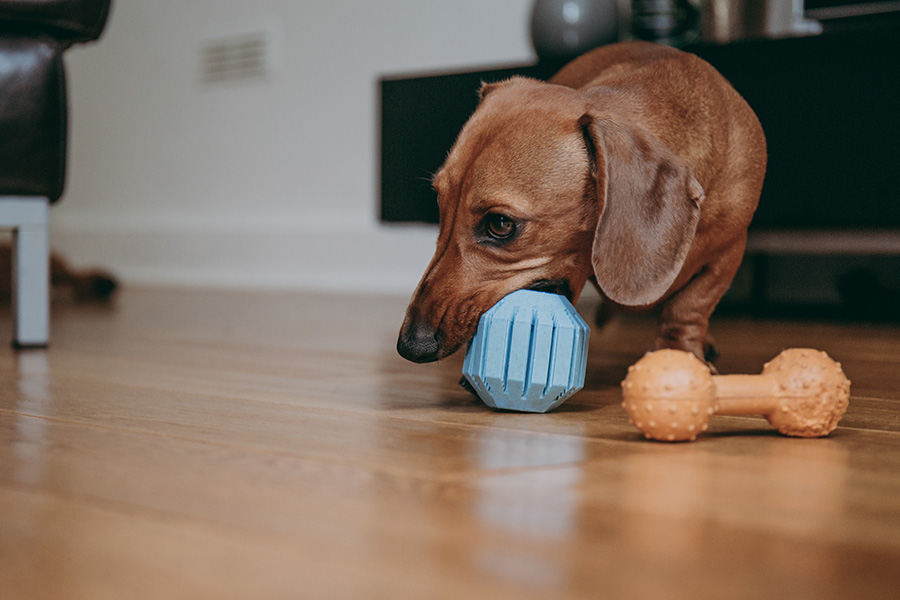
Food puzzles or safe chew items may help a dog that enjoys them. Test an item while you are present before leaving it unattended. A distressed dog may not eat, so leaving a treat is not proof that the separation is manageable.
Make practice easier than a real departure
Begin with a separation your dog can handle calmly, which may initially be only a moment. Return before distress develops and build gradually based on the dog's response, not a fixed daily increase. Practice when you are not rushing to leave for work.
If picking up keys or putting on shoes already causes worry, tell your veterinarian or behavior professional. Departure-cue work should fit the individual treatment plan; repeatedly rehearsing worrying actions without guidance can make practice harder.
Keep greetings comfortable and predictable. You do not need to withhold all affection or blame yourself for causing anxiety by loving your dog.
What to do about unavoidable absences
Arrange a sitter, trusted visitor, dog walker, or another suitable care option so practice is not repeatedly interrupted by absences the dog cannot manage. Daycare is an option only if your dog is comfortable in that environment; it is not the right choice for every dog.
A second dog is not a reliable cure, and a crate may make things worse if confinement is part of the problem. Do not leave a panicking dog to injure themselves trying to escape.
When to get professional help
Contact your veterinarian promptly if your dog is injuring themselves, cannot settle during very brief absences, stops eating normally, or develops sudden behavioral changes. Treatment may require a veterinary behavior plan rather than training tips alone. Medication, when appropriate, is a veterinary decision.
Bring a short video and a simple log to the appointment: departure time, first sign of distress, bathroom opportunities, appetite, and any recent changes at home. This gives the professional something more useful than “my dog hates being alone.”
Related guides
- Common Reasons Behind Your Adult Dog Peeing In The House
- Why Do Dachshunds Like To Sleep With Covers?
- How to Clean Your Dog’s Bed