

Floppy says: A favorite lap need not be the only friendly place in a home. My owner will explain how to build comfort without competing for affection.
The owner’s explanation
A dachshund may have a favorite person, but that does not mean the dog can bond with only one family member. Familiar routines, rewarding interactions, and individual preferences can influence whom a dog seeks out. A close bond should not be confused with guarding a person or panicking whenever they leave.
Look at what your dog actually does. Choosing one lap while remaining comfortable with other people is different from growling when someone approaches that lap.

Why one person may be the favorite
The person who walks, feeds, plays with, or quietly spends time with the dog may become especially important. A dog’s previous experiences and comfort with different voices, movements, or handling styles can matter too. There is no reliable rule that dachshunds prefer a particular gender or automatically choose whoever “acts like the boss.”
You do not need to compete for affection. Forcing cuddles or taking the dog away from a favorite person can make another family member less appealing.
Help your dog feel comfortable with everyone
- Share enjoyable routines such as sniffing walks, gentle play, and simple training.
- Let the dog approach rather than insisting on being picked up.
- Use the same cues and household expectations.
- Offer a comfortable resting place where nobody bothers the dog.
- Keep interactions short enough that the dog can leave before becoming overwhelmed.
An illustrative plan is for a less-familiar adult to handle one pleasant daily activity while the favorite person remains nearby. As the dog relaxes, that person can gradually become a familiar caregiver in their own right. This is an option to try, not a guaranteed timetable.
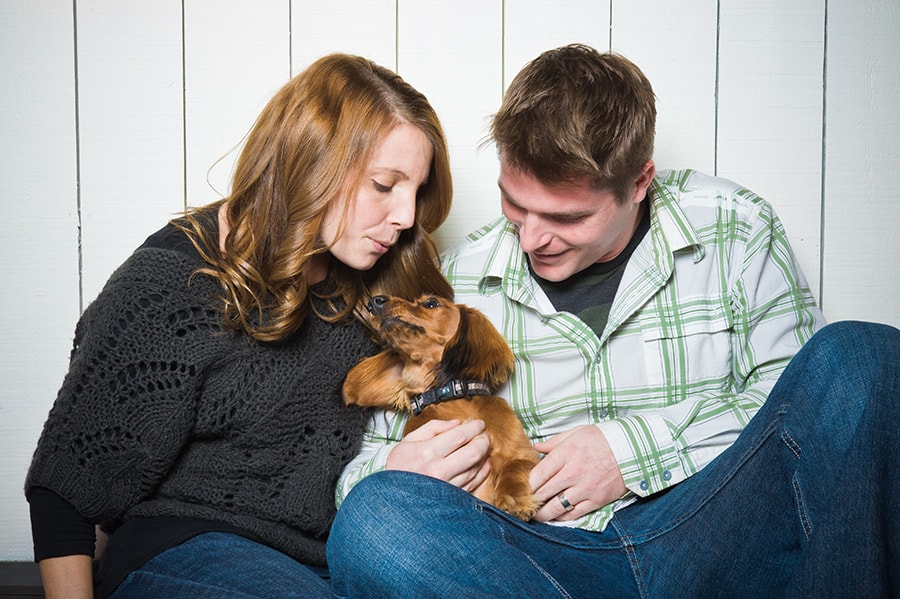
Children, hugs, and kisses
Teach children to invite contact instead of grabbing, hugging, kissing, or putting their faces close to the dog’s face. An adult should actively supervise interactions and separate child and dog when supervision is not possible. Leave a sleeping or eating dog alone. Floor-level interaction avoids the additional risk of a child dropping a dachshund. See CDC: safe interactions with dogs and bite prevention.
Pause petting briefly and see whether the dog chooses to return. Turning away, stiffening, moving off, or freezing is a reason to give space. Licking or tail movement alone does not prove enjoyment. A dog can accept affection from one person and dislike the same interaction from someone else.
When attachment needs professional help
Growling around a favorite person, blocking another person’s approach, or snapping should not be celebrated as loyalty. Avoid the triggering situation and seek veterinary and qualified behavior advice. Do not punish the warning or ask someone to “show the dog who is boss.”
Likewise, distress during separation is not proof that the bond is unusually strong. Pacing, prolonged vocalization, escape attempts, or inability to settle may warrant assessment. A veterinarian can help distinguish medical and behavioral contributors.
The useful goal is not equal affection on demand. It is a dog who can feel safe, receive care, and enjoy appropriate contact with the people in the household.
Related guides
- Can Dachshunds Make Good Family Pets?
- Reasons Why Your Pet Shouldn’t Sleep in Your Bed
- How to Prevent Your Dogs from Fighting