
Floppy says: Woof! A few hairs on your sweater are not the whole grooming story. My owner has the brush, the care tips, and the sensible warnings.
The owner’s explanation
Dachshunds shed, and the amount varies with coat type, season, health, and grooming. A smooth coat leaves short hairs; a longhaired coat can make loose hair more noticeable; a wirehaired coat needs its own maintenance. None is a promise of a hair-free home or an allergy-free dog.
Instead of relying on an unsupported breed ranking, ask whether you are comfortable with regular brushing, cleanup, and the grooming needs of the particular dog you plan to bring home.

Smooth, longhaired, and wirehaired coats
Smooth-coated dachshunds generally have a straightforward brushing routine, but short hairs can still collect in fabric. A soft brush or grooming mitt may be useful when introduced gently.
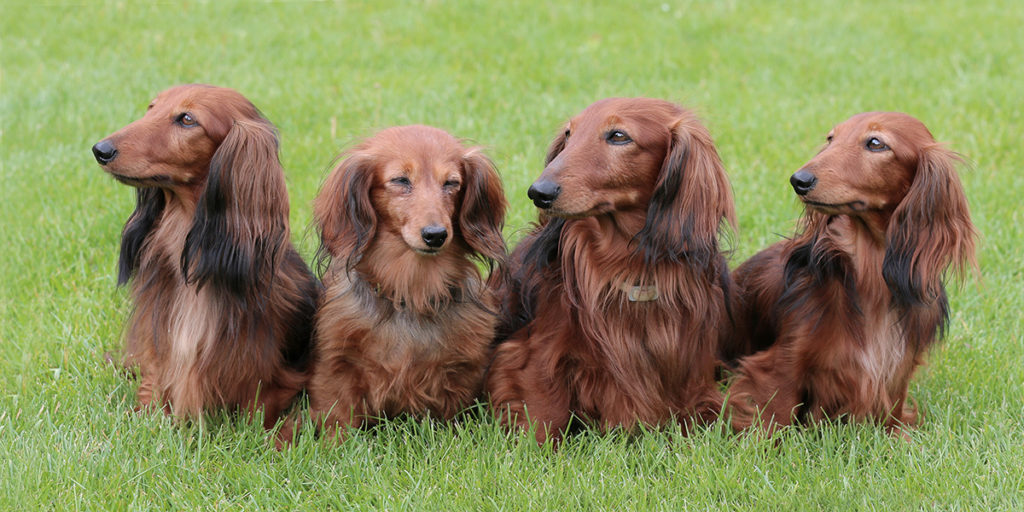
Longhaired coats need attention where hair tangles, including behind the ears and around the legs. Check frequently and work gently. Do not pull through a painful mat or cut mats out with scissors. VCA advises against scissors for mats; ask a groomer or veterinary team for help with tight tangles.
Wirehaired coats may need specialist grooming to maintain the coat’s texture and remove loose hair appropriately. Ask an experienced groomer whether hand stripping or another approach suits your dog’s coat, comfort, and needs. One schedule does not fit every dog.
A simple grooming routine
- Inspect the skin while brushing, not just the hair on the brush.
- Start with brief sessions and reward relaxed participation.
- Use tools designed for the coat rather than pressing harder to remove more hair.
- Wash bedding and vacuum favorite resting places regularly.
- Bathe when needed with a dog-appropriate product, following veterinary advice for skin disease.
There is no universal rule that every dachshund should be bathed once every three months. Lifestyle, skin condition, and the product used matter. More bathing is not automatically better, and excessive washing with an unsuitable product can irritate skin.

Shedding versus hair loss
Loose hair distributed across an otherwise healthy coat is different from bald spots, sores, redness, heavy dandruff, persistent scratching, or a sudden major change. Those signs warrant a veterinary assessment. Photograph changes and note new food, medication, parasite prevention, and grooming products so you can discuss them accurately.
Do not assume extra shedding proves a vitamin deficiency or start supplements without advice. A complete diet and appropriate medical care are more useful than guessing at a cause.
What if someone has dog allergies?
Low shedding does not mean a dog cannot trigger allergies. ACAAI explains that dog allergens occur in hair, dander, saliva, and urine. Coat length is not a reliable allergy safety test. A person with significant allergies should discuss exposure and management with their own clinician before bringing a dog home.
For most households, the decision is practical: choose a coat you can maintain comfortably, establish a gentle routine, and investigate changes rather than expecting shedding to disappear entirely.
Related reading and original listings
- Are Dachshunds Lazy? Rest, Exercise, and Changes in Energy
- Should Your Dachshund Sleep in Your Bed? Benefits and Drawbacks