Floppy says: A mystery smell deserves a closer sniff, and sometimes a vet visit!
From Floppy’s owner: A strong or persistent odor should not be dismissed as a normal dachshund trait. Start by locating the smell: mouth, ears, skin, rear end, or something the dog rolled in. If the odor returns quickly after cleaning or comes with pain, redness, discharge, itching, or a behavior change, arrange a veterinary examination rather than covering it with fragrance.
A temporary wet-dog smell is different from an unpleasant odor that persists when the coat is clean and dry. The location and accompanying signs are more useful than trying to diagnose a problem from the smell alone.

Mouth and breath
Persistent bad breath can be associated with dental problems, but odor alone does not tell you what treatment is needed. Notice whether your dog drops food, chews differently, drools, or resists having the mouth approached. Do not pry open a painful mouth.
Ask your veterinarian about dental assessment and an appropriate home-care plan. Dog-safe toothpaste and gradual toothbrushing practice can be part of that plan. Human mints, mouthwash, and toothpaste are not substitutes for veterinary care. Avoid assuming a chew toy removes established dental disease.

Ears
Smelly ears, head shaking, scratching, or visible discharge deserve a veterinary check. Ear mites are only one possible explanation; you cannot distinguish mites, infection, or another ear problem reliably by odor.
Do not pour water, oil, vinegar, or leftover medication into an irritated ear. Ask the veterinary team whether cleaning is needed and which product and technique to use. Keep cotton swabs and other objects out of the ear canal.
Skin, coat, and paws
Check for damp areas, redness, greasy skin, flaky patches, or repeated licking. Pay attention to the spaces between the toes and places covered by a harness or coat. A persistent smell can accompany a skin problem even when the dog has been bathed recently.
Remove soiled equipment and wash bedding according to its care instructions. Dry your dog's coat gently after getting wet. Do not repeatedly shampoo irritated skin or use deodorant to hide an unexplained odor; the right bathing plan depends on the cause.
Rear end
Feces caught in the coat can cause odor and irritation. Gently clean visible soiling if your dog is comfortable being handled. Ask a groomer or veterinarian for help with matted or heavily soiled hair rather than cutting close to the skin with scissors.
A fishy smell, scooting, licking, swelling, or discomfort can warrant an anal-sac assessment. Do not assume the sacs need routine squeezing or attempt to express a painful area yourself. Swelling, bleeding, or an open wound needs prompt veterinary attention.
When an ordinary bath is enough
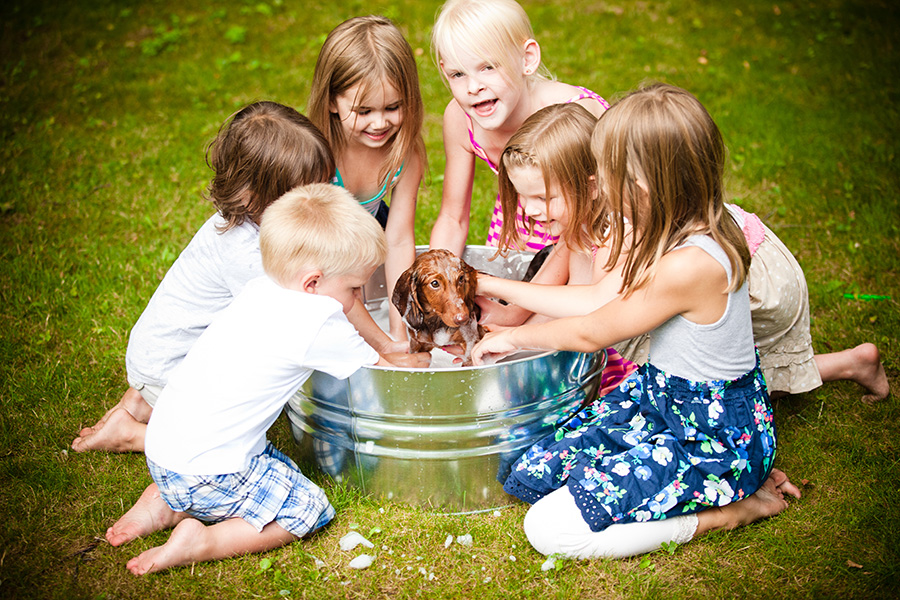
If your otherwise comfortable dog rolled in mud or a known harmless mess, a gentle bath may be appropriate. Use a shampoo intended for dogs, rinse well, and dry thoroughly without excessive heat. There is no single six-week bathing rule for every dachshund.
If the substance may be toxic, irritating, oily, or chemical, contact your veterinarian for instructions before applying a home remedy. Prevent licking while you get advice.
A simple odor log
- Where is the odor strongest?
- When did it begin, and is it new for this dog?
- Is there scratching, licking, pain, discharge, or redness?
- Did a bath help, and how quickly did the smell return?
- Have food, medication, grooming products, or equipment changed?
Bring those observations to the appointment. You do not need to identify the disease yourself. The practical goal is to distinguish a one-time grooming problem from a persistent change that needs treatment.
Floppy’s coloring book
Affiliate disclosure: As an Amazon Associate, we earn from qualifying purchases.
Separate from the care guidance: Floppy the Dachshund: Adventures Around the World coloring book on Amazon, or the book’s original short Amazon link. Check the current edition and availability with the seller.