

Floppy says: A resting nook should feel like an invitation, not a trap. My owner will explain when a crate helps and when to change the plan.
The owner’s explanation
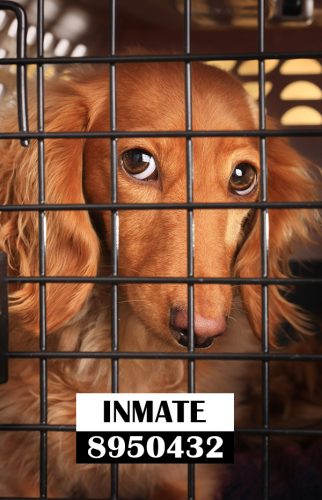
A crate can be a useful resting place for a dachshund that has learned to feel comfortable in it. It becomes a welfare problem when it is used as punishment, for prolonged confinement, or despite panic. The important question is not whether crates are always good or bad, but whether the setup meets this dog’s needs.
Crate training can support a house-training routine, but it does not replace frequent bathroom opportunities, activity, companionship, or supervision.

Choose a crate your dog can use comfortably
Your dachshund should be able to stand normally, turn around, and lie in a comfortable position. Check length as well as height: a low dog can still need substantial floor space. Follow the product’s safety instructions and check for sharp edges, damaged latches, or gaps that could trap a paw.
Use suitable bedding only if your dog will not shred and swallow it. Remove collars, harnesses, leashes, and other snag hazards before closing the crate. If a medical device must remain on, ask the veterinary team how to manage confinement safely. Place the crate in a comfortable part of the home, away from direct heat, drafts, and constant disturbance.
Begin with the door open
Let your dog investigate without being pushed or pulled inside. Reward approaching and entering voluntarily. If meals are comfortable near the crate, gradually place them farther inside. A dog that will not approach needs an easier step, not a forced stay.
The crate should remain available as a place to rest, not become a trap that closes whenever the dog steps inside.
Add the closed door gradually
Once your dog relaxes inside, practice briefly closing and reopening the door while you remain nearby. Increase duration only while the dog stays comfortable. Practice your own movement away separately from the time spent behind a closed door.
Do not jump from a few successful seconds to a full night or workday. Before leaving, use a camera or another suitable way to check that your dog really settles rather than assuming silence means comfort.
Use a bathroom schedule, not an endurance test
Offer toilet breaks after waking and at other predictable times in your dog’s routine. Puppies, older dogs, and dogs with medical conditions may need more frequent opportunities. Set up care for absences longer than the individual can manage comfortably.
An accident in the crate is a reason to review timing, health, and distress. Do not reduce the space until the dog cannot move comfortably or punish the dog for soiling. A crate should never be used to test how long a dog can hold urine.

Know when to stop
Persistent panting, drooling, frantic scratching, biting the bars, or attempts to escape are not behaviors to simply wait out. Make the situation safe and seek professional guidance. Check ordinary needs as well: a crying puppy may need to toilet, may be uncomfortable, or may be frightened. See VCA Animal Hospitals: crate training and confinement.
Mild uncertainty during an introduction and severe separation-related distress are not the same problem. If your dog is distressed when alone, changing crate size or adding more toys may not address it.
Alternatives are allowed
Some dogs do better behind a gate, in a puppy-proofed room, or in a suitable pen. Test the alternative while you are present and check that it does not create new escape or chewing hazards. A sitter or trusted visitor may be necessary while alone-time skills develop.
You do not have to make every dog sleep in a crate. The goal is safe, comfortable rest and manageable routines, not compliance with a particular training ideology.
Medical confinement is a separate issue
A veterinarian may prescribe restricted activity after injury or surgery. Follow that individualized plan, including the size of the recovery area and permitted movement. Do not abandon necessary medical confinement because a general article says crates are unsuitable for a condition. If the dog cannot settle, call the veterinary team so the plan can be adjusted safely.
Before extending crate time, ask: has my dog toileted, can they rest comfortably, have I observed calm behavior at this duration, and is there a care plan if I am delayed?
Crate bedding mentioned in this article
Affiliate disclosure: As an Amazon Associate, we earn from qualifying purchases. This article contains affiliate links.
The original listing is for Pet Dreams crate bedding, not a crate. Bedding is optional and unsuitable if your dog tears or swallows it. Check the current listing, dimensions, and care instructions; no claim about current availability or individual suitability is made here.
- Pet Dreams crate bedding on Amazon (affiliate link)
- Original short link for Pet Dreams crate bedding (affiliate link)
Related guides
- How To Potty Train Your Dachshund Puppy Fast
- Why Do Dachshunds Like To Sleep With Covers?
- How to Clean Your Dog’s Bed