
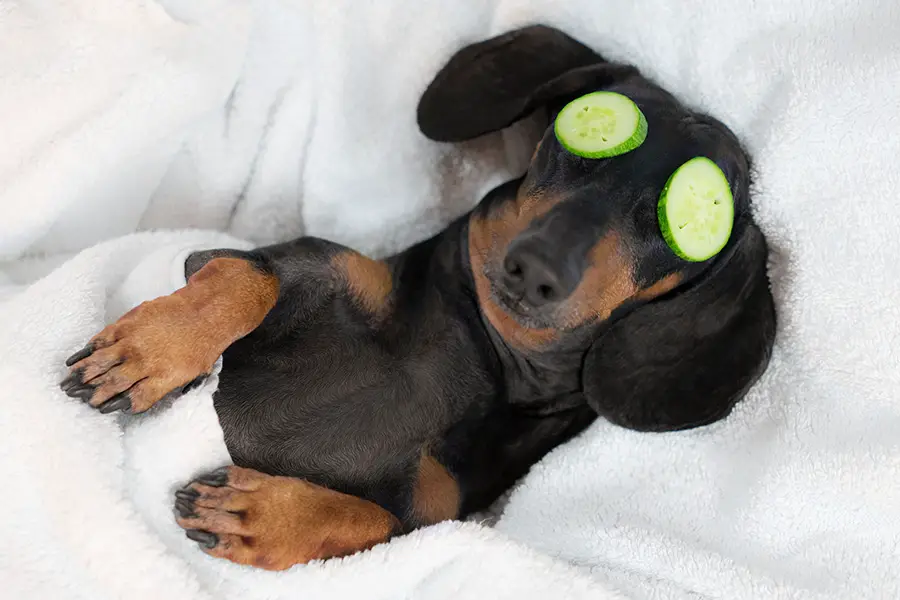
Floppy says: My coat does not need to win a shine contest. Comfortable skin is the prize!
From Floppy’s owner: A healthy-looking dachshund coat depends on appropriate nutrition, suitable grooming, and healthy skin. If the coat suddenly becomes dull, thin, greasy, or itchy, look for the cause rather than automatically adding oils or changing food. Shine alone is not a complete measure of health, especially across different coat textures.
Start with a consistent brushing routine and a complete diet, then ask your veterinarian about persistent changes.

Check the skin as well as the hair
Part the coat gently in several places and look for redness, flakes, bald areas, sores, or debris. Notice whether your dog scratches, chews, or avoids being touched. Do not force an inspection of a painful area.
A dull coat can have several explanations. It is not enough to diagnose a protein deficiency from appearance or assume expensive food will resolve the problem. Bring photographs and a timeline if the change is gradual or intermittent.
Choose nutritional adequacy over marketing
A complete and balanced food appropriate to life stage supplies the foundation for skin and hair health. Discuss medical dietary needs with your veterinarian. The ingredient listed first is not a reliable stand-alone measure of overall nutritional quality.
There is no sound reason to reject every food containing grains, byproducts, or an ingredient called “meal” merely because those words appear on the label. Ask about formulation, nutritional adequacy, and quality control rather than relying on fashionable ingredient rules.
Do not guess at supplement doses
Fish oils and other supplements may have a role for particular dogs, but the product, dose, calories, and existing diet all matter. Do not add a tablespoon of oil or a fixed amount of fish based on a generic dachshund article. Too much or an unsuitable product can create problems rather than improve the coat.
If your veterinarian recommends a supplement, ask what benefit to expect, how long to try it, and what side effects to watch for. Do not use raw fish or bones as a shortcut to a shiny coat.
Smooth coats
Use a gentle tool suited to short hair and your dog's skin. A soft brush or suitable grooming mitt may help remove loose hair without scraping. Work with the direction of hair growth and check that your dog remains comfortable.
Short hair does not mean no shedding or no skin care. Avoid repeated hard brushing in an effort to remove every loose hair.
Longhaired coats
Check areas that tangle easily, including behind the ears, under the body, and around the legs. Work through loose tangles gently and stop if they pull the skin. Brush before bathing when appropriate, because wetting a tangled coat can make it harder to manage.
Do not cut a tight mat close to the skin with household scissors. Skin can be pulled into a mat and is easy to injure. Ask a groomer or veterinarian for help with painful or tightly matted areas.
Wirehaired coats
A wirehaired coat has a different texture from a silky long coat, so a glossy appearance is not the right goal. Ask a groomer familiar with the variety about appropriate brushing and whether stripping or clipping fits the dog's needs.
A grooming method should never depend on making the dog endure significant discomfort. Explain any skin sensitivity or medical history before the appointment.
Bathing and everyday maintenance
Use a dog-appropriate shampoo and rinse thoroughly. The best frequency depends on the dog, dirt, skin condition, and any treatment plan, not a universal six-week rule. Dry gently and keep the dog comfortable afterward.
Wash bedding and inspect harnesses or clothing for dampness and rubbing. A clean coat under a poorly fitted harness can still become irritated.
A practical next step
If the coat is comfortable and the skin looks normal, refine grooming rather than adding products. If there is itching, odor, hair loss, or a persistent change, book an examination. Bring the food label, supplement list, grooming products, and photos so the veterinarian can evaluate the whole picture.