
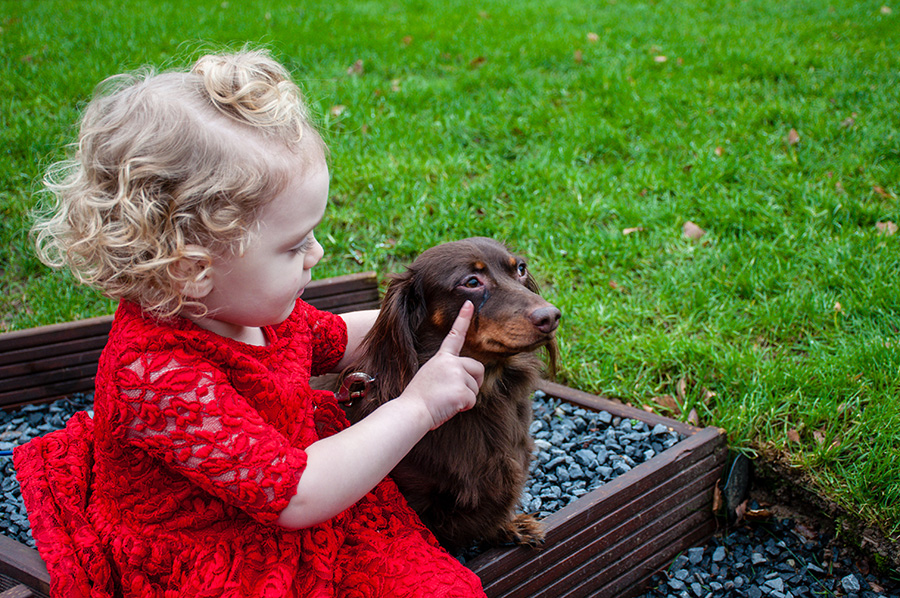
Floppy says: A whine deserves a closer look, not an instant translation. My owner will explain the difference between vocalizing and watery eyes.
The owner’s explanation
Dachshunds can whine, whimper, howl, or yelp. Those sounds may reflect a need, excitement, frustration, fear, or pain; they do not all mean separation anxiety. Wet eyes are a different issue and should not automatically be interpreted as emotional crying.
Start by checking the circumstances and your dog’s overall condition. Sudden vocalizing with pain or weakness needs veterinary advice. Breathing difficulty, collapse, or sudden inability to walk requires urgent care.

Whining when you leave
A dog who vocalizes during departure may be unsettled, but the sound alone does not establish a diagnosis. Watch for the broader pattern: pacing, escape attempts, inability to settle, or other signs of distress. A safe recording can help show what happens after you leave.
Do not simply keep lengthening absences while your dog panics. Arrange appropriate care where possible and ask your veterinarian or a qualified behavior professional for a gradual plan matched to the dog’s response.
Practicing departure cues at a comfortable level may be part of that plan, but there is no universal sequence that cures every dog. A toy or item carrying your scent is not a guaranteed treatment either. Only leave items that are safe for that dog’s chewing habits.
Whining for everyday needs
Check bathroom access, water, rest, temperature, and whether the dog is stuck or frightened. Meet genuine needs. For predictable requests, you can teach a simple alternative, such as approaching a door mat, rather than deliberately encouraging louder barking.
If whining happens during play or training, reduce frustration and make the task easier. Reward calm participation. Avoid expecting a puppy to remain silent while their physical needs go unmet.
Yelping or crying during movement
A dog who cries when lifted, avoids walking, or reacts to touch may be painful. Stop testing the movement and contact your veterinarian. Do not give human pain medicine or use someone else’s prescription.
For a dachshund with sudden weakness or inability to walk, seek urgent care and minimize unnecessary movement while arranging transport. Vocalization is only one possible sign of pain; a quiet dog can still be unwell.

Watery eyes are not the same as whining
Persistent tearing, discharge, redness, squinting, or rubbing the face calls for an eye assessment. Do not assume the dog is sad, and do not apply human eye drops without veterinary advice. Eye pain, a suddenly closed or squinting eye, or sudden vision changes needs urgent veterinary assessment. See Cornell University: glaucoma and eye warning signs.
What about smiles and laughter?
A relaxed open mouth during comfortable play can look like a smile, and playful breathing can sound expressive. Those observations do not prove the dog is laughing in the human sense. Use the whole interaction to judge comfort rather than labeling every expression.
Your next step should fit the cause: a bathroom break for a bathroom need, a safer setup for fear, training for a learned request, or veterinary care for possible pain or illness. Punishing the sound alone does not resolve the underlying problem.
Related guides
- Do Dachshunds Have Leg Problems?
- Common Reasons Behind Your Adult Dog Peeing In The House
- Why Do Dachshunds Like To Sleep With Covers?