
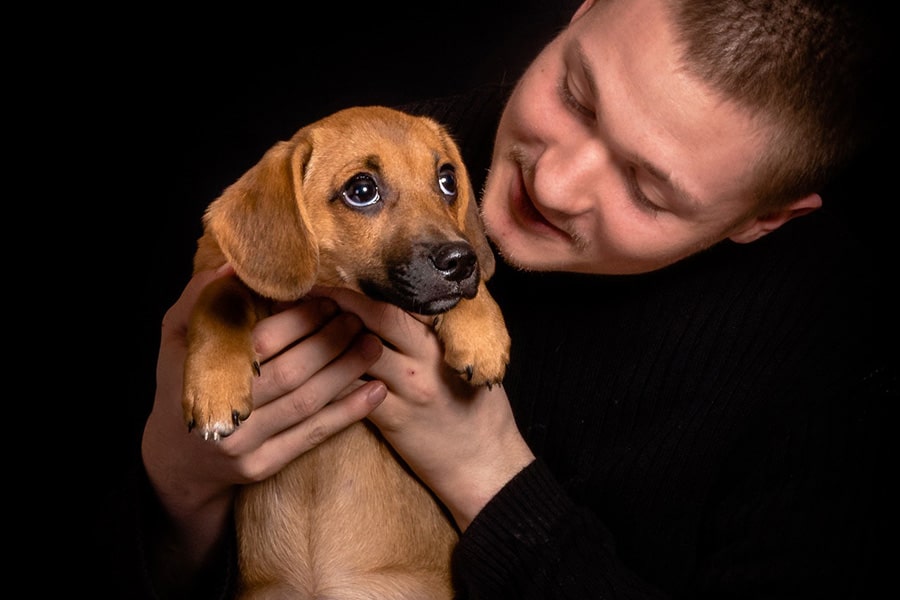
Floppy says: Meals, naps, bathroom breaks, and a little exploring: puppy life is busy!
From Floppy’s owner: Dachshund puppy care is easiest to manage as a routine: appropriate meals, frequent toilet breaks, comfortable sleep, gentle training, grooming practice, and veterinary follow-up. Build the schedule around the individual puppy rather than expecting a small dog to need little attention.
Daily essentials

Offer the puppy’s appropriate growth diet in the amount and frequency agreed with your veterinarian. Keep fresh water available and monitor appetite. Count training food within the daily intake rather than adding unlimited treats.
Plan toilet opportunities after waking, meals, drinking, and play. Reward success promptly. Provide undisturbed naps and use a puppy-safe area when you cannot supervise. Repeated accidents mean the schedule or health needs reassessment, not that the puppy needs harsher discipline.

Handle and move the puppy comfortably
Support the chest and hindquarters when lifting, keep the body secure, and avoid dangling the puppy by its front legs. Adults should handle carrying until children can follow safe instructions with supervision.

Prevent unsupervised falls, provide secure footing, and ask your vet about suitable exercise and access to stairs or furniture. Dachshunds are predisposed to disc disease, but no lifting technique or ramp can promise prevention. New pain needs prompt veterinary advice. Sudden weakness, wobbliness, or difficulty standing or walking needs urgent veterinary assessment.
Make learning part of ordinary life
Teach a name response, calm handling, and brief settling through rewards. Keep practice short and easy enough for success. Introduce new sights, sounds, and people at a comfortable distance rather than forcing contact.
Discuss safe socialization and local disease risks with your veterinarian. A suitable puppy class can provide structured learning, but its hygiene practices and training methods matter. Avoid classes that rely on intimidation or promise instant obedience.
Keep a veterinary calendar
Bring prior records to the first visit. Ask for a plan covering vaccinations, parasite prevention, growth, nutrition, and follow-up. Vaccine choices and timing depend on age, prior doses, location, lifestyle, and applicable requirements, so do not copy a generic list from another dog.
Let the clinic know about travel, boarding, daycare, or contact with other animals. Keep the emergency clinic’s details accessible before an emergency occurs.
Practice grooming gradually
Introduce a brush, brief paw handling, and appropriate tooth care with rewards. Longhaired coats need attention to tangles; wirehaired coats may benefit from a groomer’s advice. Bathing frequency depends on the coat, dirt, skin condition, and any prescribed products, not a universal three-month rule.
Ask for a nail-trimming demonstration rather than guessing where to cut. Notice ear odor, discharge, redness, persistent itching, or skin changes and seek advice instead of repeatedly cleaning a painful area.
Check the home each week
- Inspect toys and remove damaged items.
- Recheck gates, fence gaps, cords, and accessible small objects.
- Secure food, medication, cleaning products, and trash.
- Reassess harness fit as the puppy grows.
- Review the meal, toilet, and sleep log for changing needs.
A puppy that is unusually lethargic, repeatedly vomiting, weak, painful, or not eating needs timely veterinary advice. Do not wait for a routine appointment if the puppy appears significantly unwell. Consistent observation is as important as any item on the shopping list.