
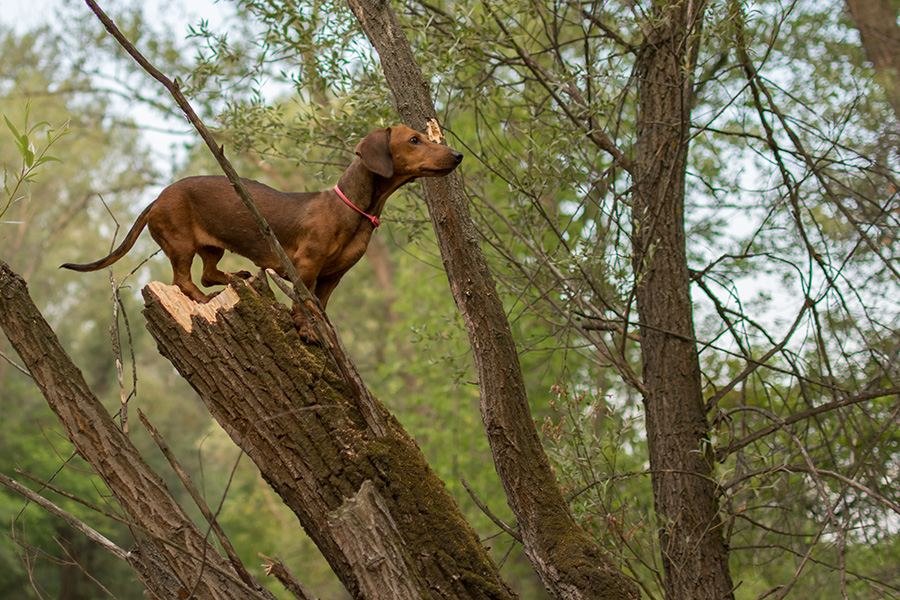
Floppy says: Personal space is a good thing, even for a small dog. My owner will explain how to notice discomfort and make everyday care kinder.
The owner’s explanation
Dogs do not all dislike the same things, but forced contact, frightening experiences, painful handling, and unpredictable treatment can make many dogs uncomfortable. Watch your individual dog and change the parts of a situation that cause discomfort.
Watch the whole body and the situation. Moving away, freezing, turning the head, or becoming stiff can mean an interaction needs to stop. A wagging tail does not automatically make the rest of the body language friendly.

Forced greetings and close contact
Allow your dachshund to choose whether to approach visitors or unfamiliar dogs. A dog park is not a necessary test of sociability. If your dog is trying to hide or leave, create distance rather than making them “say hello.”
Avoid tight hugs, face-to-face crowding, and lifting without warning. Invite contact, pet briefly in an area the dog appears to enjoy, then pause. If the dog moves away, let them. Children need active adult supervision and a clear rule that sleeping and eating dogs are left alone.

Loud sounds and frightening situations
Thunder, fireworks, construction, or household noises can be upsetting. Provide a comfortable retreat and reduce exposure where possible. Do not force a dog to remain near a noise until they give up reacting. A quiet dog is not necessarily a relaxed dog.
For recurring fear, speak with your veterinarian before the next predictable event. Training plans should be gradual and remain within the dog’s ability to cope. Pressure wraps, supplements, and other products are not guaranteed solutions or substitutes for assessment.

Handling, grooming, and clothing
Brushing a mat, trimming a painful nail, or pulling a tight garment over the head can hurt. Break routine care into small, rewarded steps. A groomer or veterinary team can help if necessary care cannot be completed comfortably.
Do not skip needed hygiene indefinitely because the dog dislikes it, but do not turn it into a struggle either. Ask for a safe plan. Clothes should have a practical purpose or be tolerated comfortably; remove them if they restrict movement, snag, or cause distress.

Too little choice and too little to do
A dog needs opportunities to rest undisturbed as well as appropriate activity and social contact. Sniffing on a safe walk, gentle play, and manageable training can add variety. Constant entertainment is not required, and more exercise is not the answer to every behavioral concern.
Long absences can be difficult for some dogs. Arrange care that meets bathroom and social needs. Pacing, escape attempts, or persistent distress when alone deserve help, not a demand to “get used to it.”

Inconsistent rules and harsh correction
Choose a few clear expectations and teach the behavior you want. If jumping is inconvenient, practice a calm greeting. If table begging is a problem, teach settling away from the meal. Reward success rather than waiting for a mistake to punish.
AVSAB recommends reward-based training. Physical punishment and intimidation are not needed to establish a relationship or make a dog understand household rules. See AVSAB: humane, reward-based dog training.

Strong smells and unpleasant weather
Let your dog move away from fragrance and avoid using pepper, essential oils, or harsh chemicals as training deterrents. Store cleaners securely and follow product directions. “Natural” does not mean harmless.
For a dachshund reluctant to enter rain or cold, consider a sheltered bathroom spot, a well-fitting coat when appropriate, and shorter outings. Do not assume every refusal is stubbornness; discomfort or pain may be involved.

A quick comfort check
Ask whether the dog can move away, whether the interaction is necessary, whether there is a gentler way to do it, and whether a new reaction might indicate pain. Respecting those answers makes ordinary care easier without pretending to know every thought in your dog’s head.

Related guides
- What Smell Do Dachshunds Hate The Most?
- Can Dachshunds Make Good Family Pets?
- Reasons Why Your Pet Shouldn’t Sleep in Your Bed