

Floppy says: Another bathroom break, please. My paws are ready for the door!
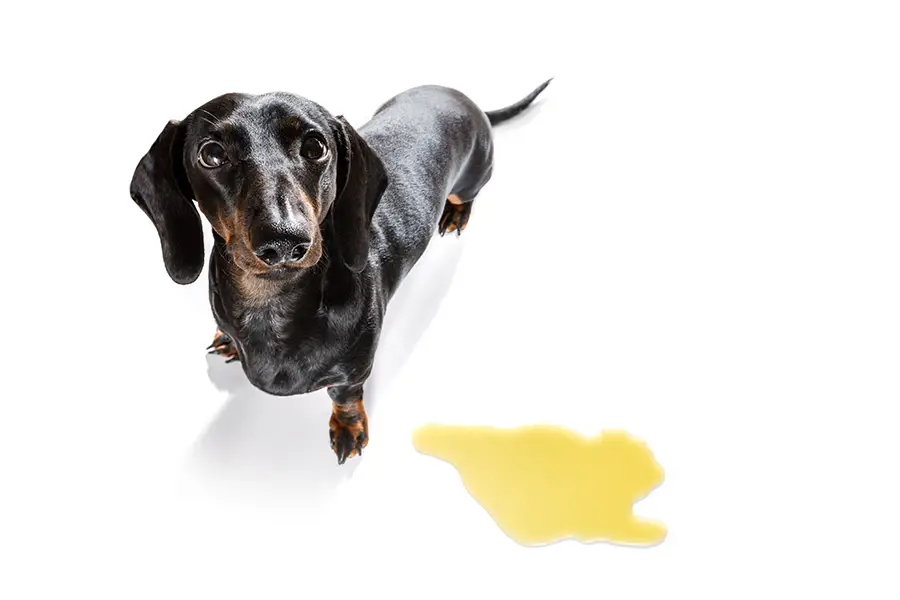
From Floppy’s owner: Dogs pee indoors for several reasons: incomplete house-training, too few bathroom opportunities, marking, fear or excitement, incontinence, and medical conditions. Do not assume your dachshund is doing it for attention or out of spite. A sudden change in a previously reliable dog deserves a veterinary check.
Repeated straining with little or no urine, obvious pain, or inability to urinate needs urgent veterinary attention. Do not delay because you think your dog is merely marking.

Look for a pattern, not a verdict
Note when the accidents happen, approximately how much urine appears, and whether your dog is awake, asleep, or greeting someone. Small amounts on upright objects may suggest marking; leakage during sleep may suggest another problem. These are clues, not diagnoses.
Increased drinking, blood in urine, changes in appetite, and more frequent requests to go outside are important details to share with your vet. Do not restrict water to prevent accidents unless your veterinarian specifically directs you.
Start with a medical check when appropriate
A veterinary assessment can identify physical illness, particularly when house soiling begins suddenly. Medical and behavioral factors can also occur together. A previously house-trained dog can still develop urgency, pain, or difficulty reaching the usual exit.
Ask whether a urine sample or other information is needed before the appointment. Never use leftover antibiotics or assume an infection has returned without assessment.
Rebuild the bathroom routine
- Offer regular trips after waking, meals as appropriate, play, and before bed.
- Use an easy-to-reach, quiet bathroom area.
- Reward your dog immediately after finishing in the intended spot.
- Supervise indoors and use a comfortable, appropriately sized restricted area when needed.
- Clean accidents with a pet-appropriate enzymatic cleaner, following its instructions.
- Record successes and accidents so you can adjust the schedule.
Do not scold, startle, or rub your dog’s nose in urine. If you discover an old accident, clean it and change the setup. If you notice your dog preparing to go, calmly take them outside when it is safe to do so.
If marking seems likely
Consider recent changes: a visitor, a new pet, unfamiliar belongings, or dogs visible through a window. Reduce access to repeatedly marked areas while you investigate. Separate dogs when necessary to reduce tension and give each a calm resting space.
Discuss neutering with your veterinarian in the context of the individual dog’s health and behavior. It is not a guaranteed cure and should not replace training or medical assessment.
Make the plan realistic
Puppies, senior dogs, and dogs with mobility problems may need more frequent help. For a dachshund, an exit requiring difficult stairs can become a practical barrier. Arrange daytime assistance if the household schedule exceeds the dog’s comfortable waiting time.
Improvement has no guaranteed deadline. If accidents continue despite a consistent routine, return to the veterinarian and ask whether a qualified behavior professional should be involved.