
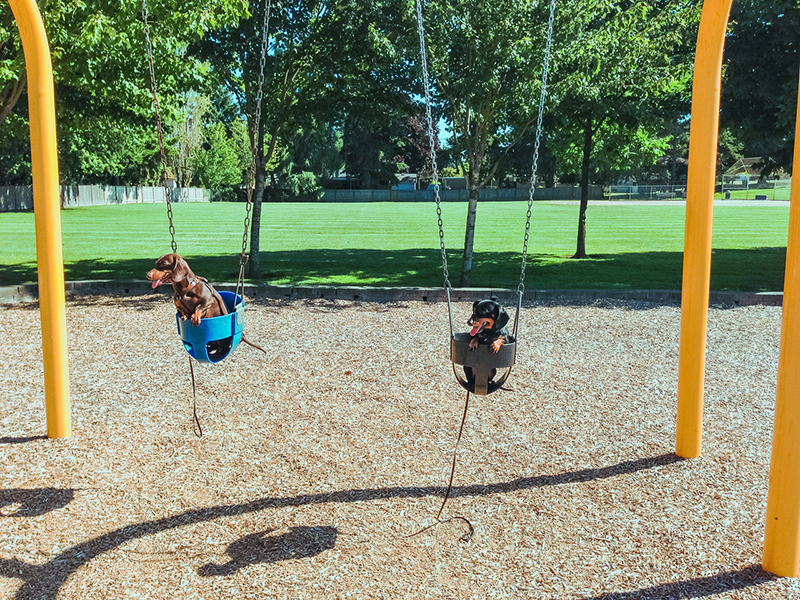
Floppy says: Two long noses can mean twice the sniffing, but also two sets of needs. My owner will explain what to consider before adding a dog.
The owner’s explanation
Two dachshunds can enjoy companionship, but a second dog is not automatically better for your first dog or your household. Add another only if you want and can care for two individual dogs, including the possibility that they need separate walks, training, meals, and resting spaces.
What can be better with two?

Compatible dogs may enjoy playing, resting near one another, and exploring together. Watching a relationship develop can be rewarding. A dog comfortable around other dogs may benefit from a well-matched companion, but you should base that decision on observed behavior rather than assuming all dachshunds prefer their own breed.
Shared play does not replace your attention, exercise, or training. The older dog will not reliably housetrain the newcomer. Dogs can copy unwanted behavior as readily as useful habits.

What does not get solved automatically?
A second dog is not a dependable treatment for separation anxiety, grief, boredom, or reactivity. If your current dog is distressed, identify the cause and seek veterinary or behavior guidance first. Adding a puppy can increase pressure on a dog that already struggles.

Some dogs prefer quiet individual attention and do not welcome a permanent playmate. A successful visit with another dog does not necessarily predict sharing a home around the clock.
Budget for two complete sets of needs
Expect separate food needs, veterinary care, preventive medication, identification, and emergency expenses. Boarding or pet-sitting costs may rise too. Some supplies can be shared at different times, but do not assume bowls, beds, or valued toys can be shared without conflict.
Before deciding, price the recurring costs and consider what would happen if both dogs needed treatment at once. A second dog is not a low-cost upgrade to the first.
Choose compatibility over appearance
Ask about energy level, play style, health, comfort with dogs, and ability to settle. A lively puppy may overwhelm a senior; two dogs of similar age may still have incompatible personalities. Sex alone does not guarantee harmony. Discuss reproductive management with your veterinarian if either dog is intact.
Arrange careful introductions with the rescue or breeder’s help. Avoid interpreting a lack of fighting as friendship: hiding, persistent avoidance, and inability to rest also matter. See Battersea: introducing a new dog to an existing dog.
Prepare the home before arrival
- Set up separate feeding and sleeping areas.
- Use gates so either dog can have a break.
- Provide individual time with each dog.
- Train separately before practicing together.
- Supervise access to toys and chews until you understand the dynamics.
- Have a humane contingency plan if the match is unsafe.
Do not rush introductions to meet a fixed timetable. If the resident dog’s normal eating, sleeping, or relaxed behavior deteriorates, reassess.
When one dog is the better choice
Wait if your budget is stretched, training or medical issues are unresolved, or your schedule barely meets the first dog’s needs. A well-supported single dog can have an excellent life. The right decision is the one you can sustain for both dogs, not the one that promises twice the fun with the same work.
Related guides
- How to Prevent Your Dogs from Fighting
- Can Dachshunds Make Good Family Pets?
- How To Potty Train Your Dachshund Puppy Fast