

Floppy says: A cuddle invitation is sweeter when a dog can say yes or wander off. My owner will explain what affectionate behavior can and cannot tell us.
The owner’s explanation
Dachshunds may show attachment by choosing to stay nearby, seeking contact, inviting play, or greeting familiar people. But no single action, including licking or sitting on your lap, has one guaranteed meaning. Look at the whole body and the situation rather than treating every behavior as a declaration of love.
The best way to respond affectionately is to offer contact your dog enjoys and allow the dog to move away. A trusting relationship does not require constant cuddling.

Closeness can be an invitation
A relaxed dog may approach, lean gently against you, or settle beside you. Pause after a little petting and see what happens. If the dog moves closer or nudges for more, continue gently. If the dog turns away or leaves, respect that choice.
This simple pause gives your dog a say in the interaction. It is especially useful when a family member assumes a quiet dog must be enjoying a hug.
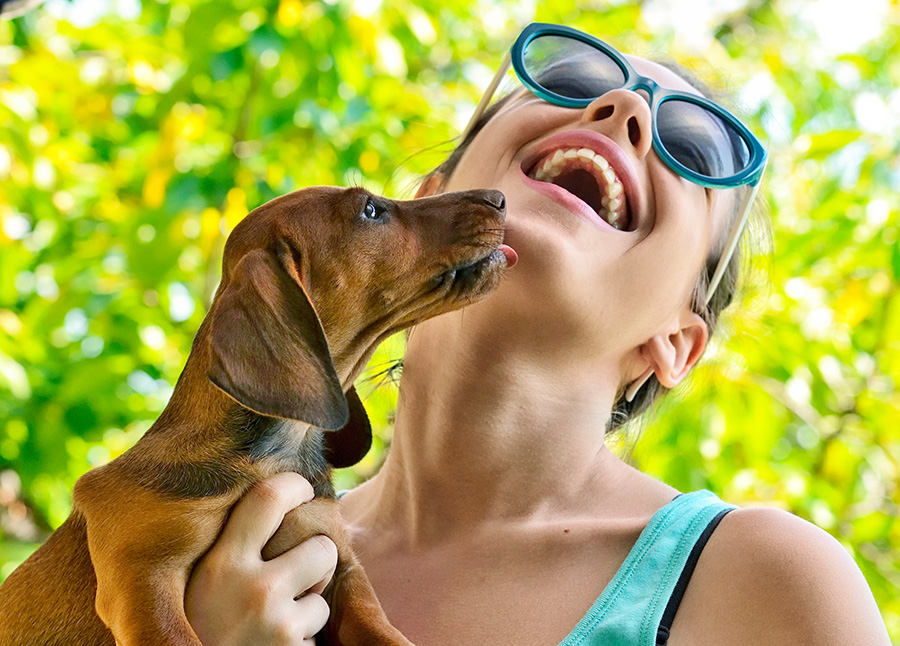
This illustration is not a recommended greeting technique. Keep faces away from a dog’s mouth, allow the dog to move away, and actively supervise children.
Licking is not a complete translation
Dogs may lick during social interactions, to investigate a taste, or because the behavior has received attention before. Licking can also occur in uncomfortable situations. Check whether the body is loose and the dog is approaching voluntarily or whether the dog looks tense and wants distance.
You can set a boundary without punishment. Turn your face away, pause the interaction, or reward another greeting such as standing calmly. Avoid face-to-face contact with a dog whose comfort you are unsure about, especially when children are involved.
Repeated licking of the dog's own paws or skin is a different issue. If it causes redness, hair loss, or soreness, consult your veterinarian rather than interpreting it as a personality trait.
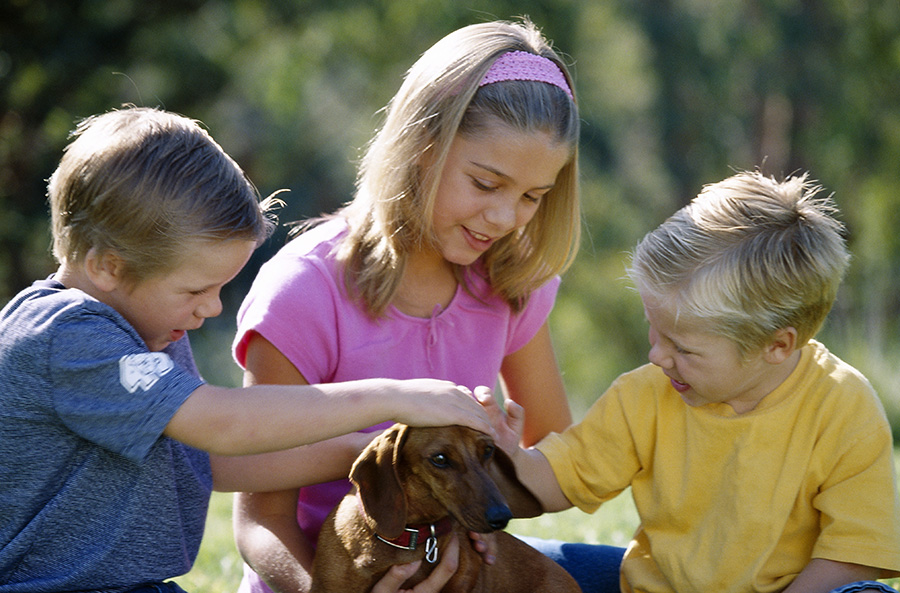
Children should interact gently, one at a time, with active adult supervision. Do not crowd or restrain a dog to obtain affection.
Sitting on you is not proof of dominance
A dog may enjoy your warmth, seek attention, or have learned that a lap is comfortable. That does not establish an attempt to control the household. If you prefer the dog beside you, provide a comfortable alternative and reward settling there.
If the dog growls when someone approaches the lap or sofa, stop treating the situation as cute protectiveness. Create space, avoid confrontation, and seek qualified help with guarding behavior.
Not every dog enjoys hugs and kisses
Human expressions of affection can feel restrictive to a dog. Turning away, stiffening, trying to leave, or growling means the interaction should stop. Do not hold the dog in place to prove that hugs are harmless. See VCA Animal Hospitals: interpreting dog body language.
For children, gentle petting at the dog's invitation and simple supervised games are safer ways to build a relationship than squeezing or putting faces close together. Adults should manage these interactions actively.
A favorite person does not exclude everyone else
Some dogs seek one person more often because of routine, familiarity, or enjoyable interactions. Other family members can build their own relationship through feeding, walks, calm play, and consistent care. Do not force the dog to accept attention to make affection “fair.”
Attachment and distress are not the same. A dog that follows you around may be comfortable doing so; a dog that panics whenever you leave needs a separate assessment and support plan.
What about sadness and crying?
Dogs can experience distress and respond to changes in their social world. Whining, withdrawal, or reduced interest in activities can have several explanations, including discomfort. Persistent changes deserve veterinary attention rather than a confident emotional diagnosis.
If a puppy cries persistently, check comfort, temperature, bathroom needs, health, and fear rather than ignoring the situation.
Build affection through predictability
Offer suitable activity, comfortable rest, gentle handling, and clear reward-based teaching. Learn which interactions your dog seeks and which they avoid. Those observations are more useful than ranking a dachshund's love against another breed's or expecting every dog to express affection in the same way.
A Floppy coloring-book link
Affiliate disclosure: As an Amazon Associate, we earn from qualifying purchases. This article contains affiliate links.
The original article included a link to Floppy the Dachshund Adventures Around the World. This coloring book is separate from the behavior guidance above. Check the current listing for its contents, price, and availability.
- Floppy the Dachshund Adventures Around the World on Amazon (affiliate link)
- Original short link for the Floppy coloring book (affiliate link)
Related guides
- Reasons Why Your Pet Shouldn’t Sleep in Your Bed
- Can Dachshunds Make Good Family Pets?
- Are Dachshunds A Smart Breed?