
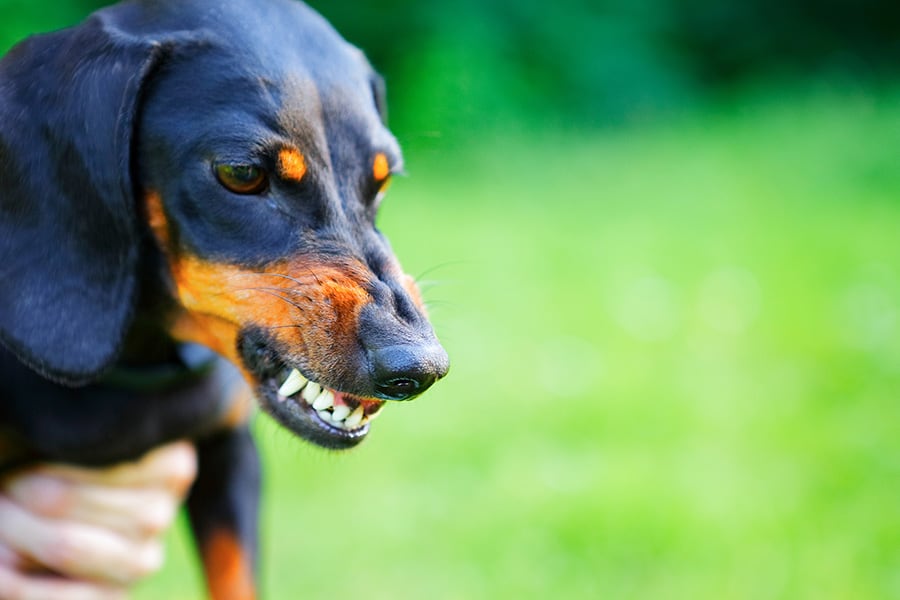
Floppy says: Tiny paws do not make a warning tiny. My owner will explain the first steps for keeping everyone safe.
The owner’s explanation
If your dachshund is growling, snapping, lunging, or biting, start by preventing another incident and arranging appropriate help. Do not confront the dog to establish dominance. Aggression can involve fear, pain, guarding, frustration, or other factors, and the same outward behavior can have different causes.
Make the situation safer now

Move children and other animals away using distance and secure barriers. Avoid reaching for a guarded object, cornering the dog, or placing your face near it. If an incident involves injury, seek appropriate medical or veterinary care.
Do not deliberately recreate the trigger to test the dog. Record what happened while it is fresh: the people or animals present, any food or toy involved, handling, distance, and the dog’s behavior before the incident.

Rule out pain and illness
New aggression, especially during lifting, grooming, or touch, warrants veterinary assessment. A painful dog may react even to a familiar person trying to help. Tell the clinic about the behavior before the visit so staff can plan safer handling. See Cornell University: recognizing pain in dogs.

Back pain is a particular concern in dachshunds, but an owner cannot diagnose the cause by observing a growl. Sudden weakness, wobbliness, inability to walk, or severe back pain needs urgent veterinary care. Restrict unnecessary movement and call the clinic for transport advice.
Understand the context
Resource guarding can involve food, chews, toys, or resting places. Feed separately and prevent approaches while you arrange help. Repeatedly taking things away to teach tolerance can make conflict worse.
Reactions to visitors or dogs near the home may involve fear, frustration, or territorial behavior. Increase distance and reduce repeated exposure, such as by covering a busy window. Forced greetings are not a safe shortcut to socialization.
Fear-related aggression may include subtle warnings before a bite, but they can be missed. Do not promise that a dog will always warn clearly or that fear-related bites never have warning signs.
Why dominance routines are not the answer
Eating before your dog, making it walk behind you, or forcing it onto its back does not address the cause of aggression. Punishing growling may suppress a warning without making the dog more comfortable. The American Veterinary Society of Animal Behavior recommends reward-based methods rather than aversive approaches.
A professional plan may combine management, gradual behavior work, and medical care. The right approach depends on risk and the dog’s response, not on a breed-wide label such as “small-dog syndrome.”
What about barking and puppy mouthing?
Not every bark or playful mouth contact is aggression. Look at context and body language. Redirect ordinary puppy play toward an appropriate toy and pause calmly when it becomes too rough. Persistent hard biting, guarding, or frightening interactions need individual assessment rather than reassurance that the puppy will grow out of it.
Choose qualified support
Ask your veterinarian for help identifying a veterinary behaviorist or appropriately qualified reward-based professional. Ask how safety will be managed, how progress will be measured, and what to do between appointments. Avoid guaranteed cures or methods that rely on pain and intimidation.
Improvement means reducing risk and helping the dog cope, not simply making it quieter. Keep a record of incidents and near misses, follow the agreed safety plan, and reassess promptly if behavior escalates.
Related guides
- How to Prevent Your Dogs from Fighting
- Can Dachshunds Make Good Family Pets?
- Do Dachshunds Have Leg Problems?