
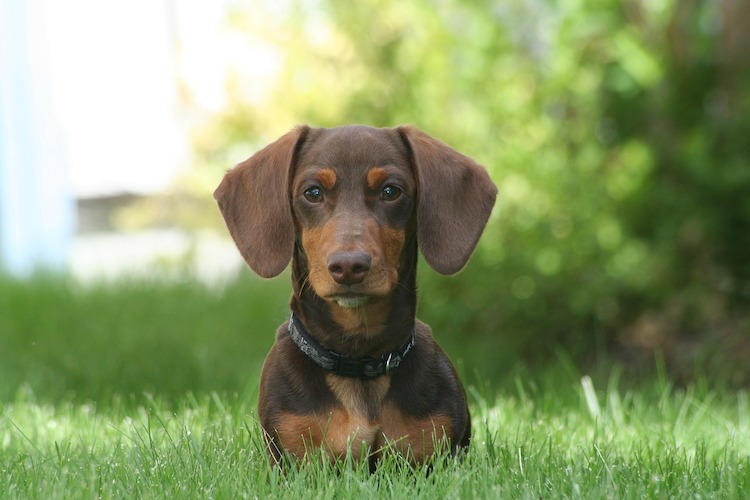
Floppy says: There is more to a dachshund than the famous long outline. My owner will explain the history, daily care, and questions to ask.
The owner’s explanation
Dachshunds are small, long-bodied hounds that can be engaging companions for owners prepared to provide training, activity, and ongoing care. Their size can suit a smaller home, but it does not remove the need for exercise, barking management, or a realistic veterinary budget.
A working breed from Germany

The dachshund’s name means “badger dog,” reflecting its German hunting background. That history helps explain why sniffing, digging, and chasing may be appealing activities. It does not mean every modern dachshund behaves identically or should be encouraged to confront wildlife.
Avoid treating stories about ancient look-alike dogs as a verified pedigree for today’s breed. For a prospective owner, the individual dog’s background and current needs matter more than a dramatic origin story.

Size and appearance
The American Kennel Club describes standard dachshunds as usually 16–32 pounds and the miniature show class as 11 pounds or less at 12 months of age or older. There are three coat types: smooth, longhaired, and wirehaired. Size classifications and show standards vary among registries, so identify the registry before interpreting a label.

A long body, short legs, and hanging ears are characteristic, but an owner should not use a visual checklist to diagnose health or prove purebred ancestry. A dog outside a show standard can still be a valued companion.
Coats, colors, and grooming
Smooth coats generally offer a simpler brushing routine. Longhaired dogs need attention to tangles, while wirehaired dogs benefit from advice about appropriate coat maintenance. All need nail, skin, ear, and dental care.
Color is not a health guarantee. Ask breeders about documented testing and responsible breeding decisions rather than choosing solely for “rare” coloring. Dapple-related breeding questions deserve knowledgeable genetic guidance, not an assumption that unusual eyes or markings prove quality.
Temperament and trainability
Expect individual variation in confidence, sociability, energy, and tolerance of handling. A dachshund may be quick to learn a skill indoors but struggle to respond around interesting smells outdoors. Practice gradually with rewards and manage situations in which recall is unreliable.
Housetraining requires supervision and a routine. Do not use dominance, “small-dog syndrome,” or stubbornness as substitutes for identifying what the dog has learned and what remains difficult.
Children and other animals
Supervise interactions with children and protect resting and feeding areas. Teach children to invite contact rather than grab or lift the dog. Some dachshunds coexist with cats; others present a serious chasing risk. Use careful introductions and secure separation when needed. Growing up together does not guarantee safety.
Health and daily care
Intervertebral disc disease is an important breed concern. Seek urgent veterinary advice for new pain, weakness, loss of coordination, or inability to walk. Keeping a dog fit and managing the environment are sensible, but they cannot guarantee prevention. See American College of Veterinary Surgeons: intervertebral disc disease.
Build a routine that includes an appropriate complete diet, comfortable exercise, enrichment, grooming, and preventive veterinary care. VCA lists a typical lifespan range of 12–16 years, so think beyond the puppy stage when budgeting and planning.
Questions before committing
Can your household manage daytime care, barking, training, and unexpected illness? Does the individual dog’s activity level match yours? Are health and behavior records available? A good decision comes from honest answers, not a promise that dachshunds are either perfect beginner dogs or impossible to train.
Related guides
- A Guide To Coat Varieties In Dachshund
- Can Dachshunds Make Good Family Pets?
- The Most Important Thing To Know About A Dachshund's Health
Sources and further guidance
- AKC: Official Standard of the Dachshund
- Dachshund Club of America: breed history
- VCA Animal Hospitals: dachshund breed overview
- AVSAB: humane, reward-based dog training
- American College of Veterinary Surgeons: intervertebral disc disease
- CDC: safe interactions with dogs and bite prevention
- PDSA: introducing cats and dogs
- UC Davis Veterinary Genetics Laboratory: merle