

Floppy says: Short legs do not come with built-in snow boots. A warm, dry finish to our walk, please!
From Floppy’s owner: Many dachshunds need extra protection in cold, wet weather, but there is no single temperature that is safe for every dog. Coat type, age, health, wind, rain, and time outdoors all matter. Watch your dog’s behavior as well as the forecast.

Start with the conditions, not a rigid cutoff
A dry, calm outing can feel very different from the same temperature in driving rain. A puppy, an older dog, or a dog with a health condition may need a shorter outing than a healthy adult. Long hair does not make a dachshund immune to cold, and smooth-coated dogs may need help staying comfortable sooner.
Shivering, lifting the paws, slowing down, or repeatedly trying to return home are reasons to end the outing. Do not push through those signs to complete a planned distance. If shivering continues after returning indoors, contact a veterinarian. Weakness, unusual drowsiness, impaired coordination, or collapse after cold exposure needs urgent veterinary care.
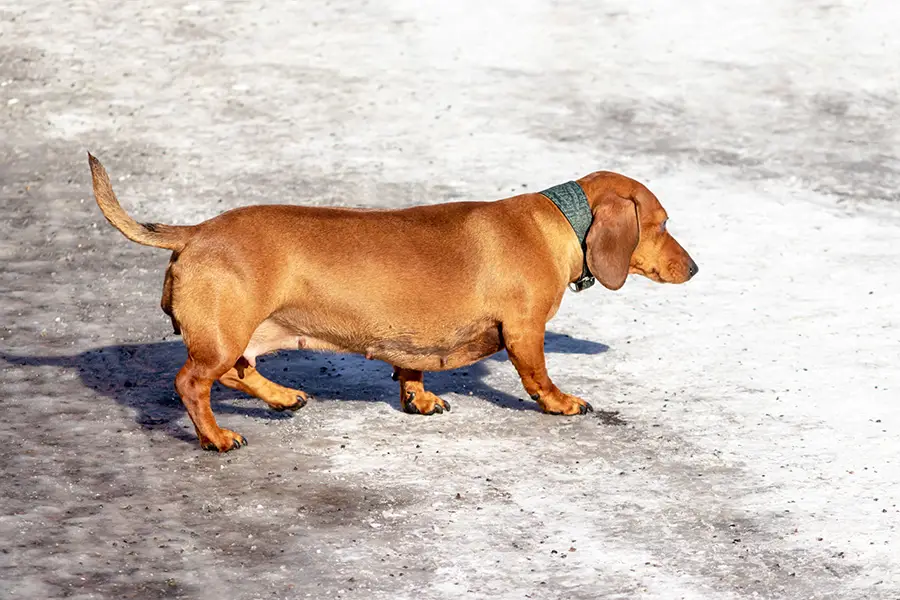
A practical cold-weather routine
- Check wind and precipitation before leaving, and plan a route with an easy way home.
- Use a well-fitting coat when your dog needs it. The dog should be able to walk, breathe, and relieve themselves normally.
- Inspect the belly and paws after walks, remove ice or debris, and dry wet fur.
- Keep a warm, dry resting place indoors, away from drafts and direct contact with heaters.
- Use short outdoor bathroom trips and suitable indoor enrichment when conditions are unsafe.
Choose a coat for fit, not just appearance
Measure your dog rather than buying by breed name alone. A dachshund’s long body can make a standard small-dog size a poor fit. Check the chest, neck, and back-length measurements against the manufacturer’s chart. Recheck fit while your dog moves, and remove a damp coat rather than leaving it on indoors.
What cold weather does not explain
Cold air alone does not establish that sneezing, fever, pain, or lethargy is a simple “cold.” New symptoms deserve attention, especially if they persist after your dog is warm. Do not assume that a reluctance to walk is stubbornness: pain, slippery footing, and fear can also play a part.
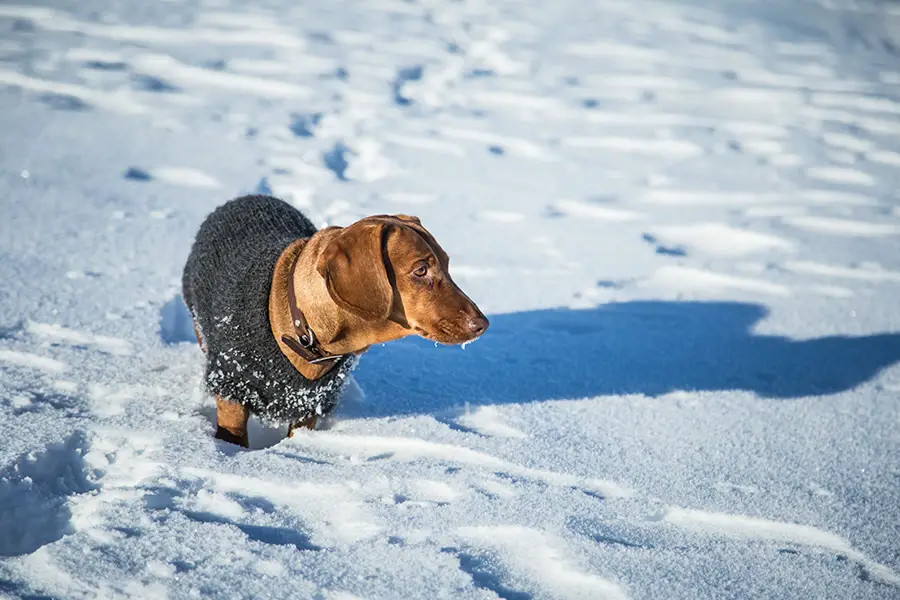
Keep activity appropriate
A winter routine should balance comfort, bathroom needs, and safe movement. Regular activity does not guarantee protection from intervertebral disc disease. If your dog has back pain, a recent injury, or a prescribed rest plan, follow the veterinarian’s instructions rather than using a general walking recommendation.